Training kit
A mat has to stay put, provide appropriate comfort and fit your storage space. Thickness alone does not answer those questions.
A mat used mainly for floor exercises may need a different balance of cushioning and firmness from one used during standing work. Very soft padding can feel comfortable under a knee while creating an unsteady surface under a foot. Describe the movements you intend to practise before comparing products.
Check usable length and width against your body and the movement, not just the space where you will store the rolled mat. Lie down, extend your arms where the exercise requires and consider transitions. A mat that fits your torso may still leave hands or feet on a slippery floor.
The top needs to feel appropriate against hands, feet and clothing. The underside needs to work on your actual floor. A texture that grips well on one surface may behave differently on carpet or smooth laminate. Look for a product description that explains intended use, and test carefully within the retailer's return conditions.
A mat cannot correct uneven ground or make a wet floor safe. Clear dust and debris from the area and place the mat flat. Curling edges can catch a foot, particularly during transitions. If the mat shifts during an unloaded rehearsal, stop and resolve the setup before adding resistance.
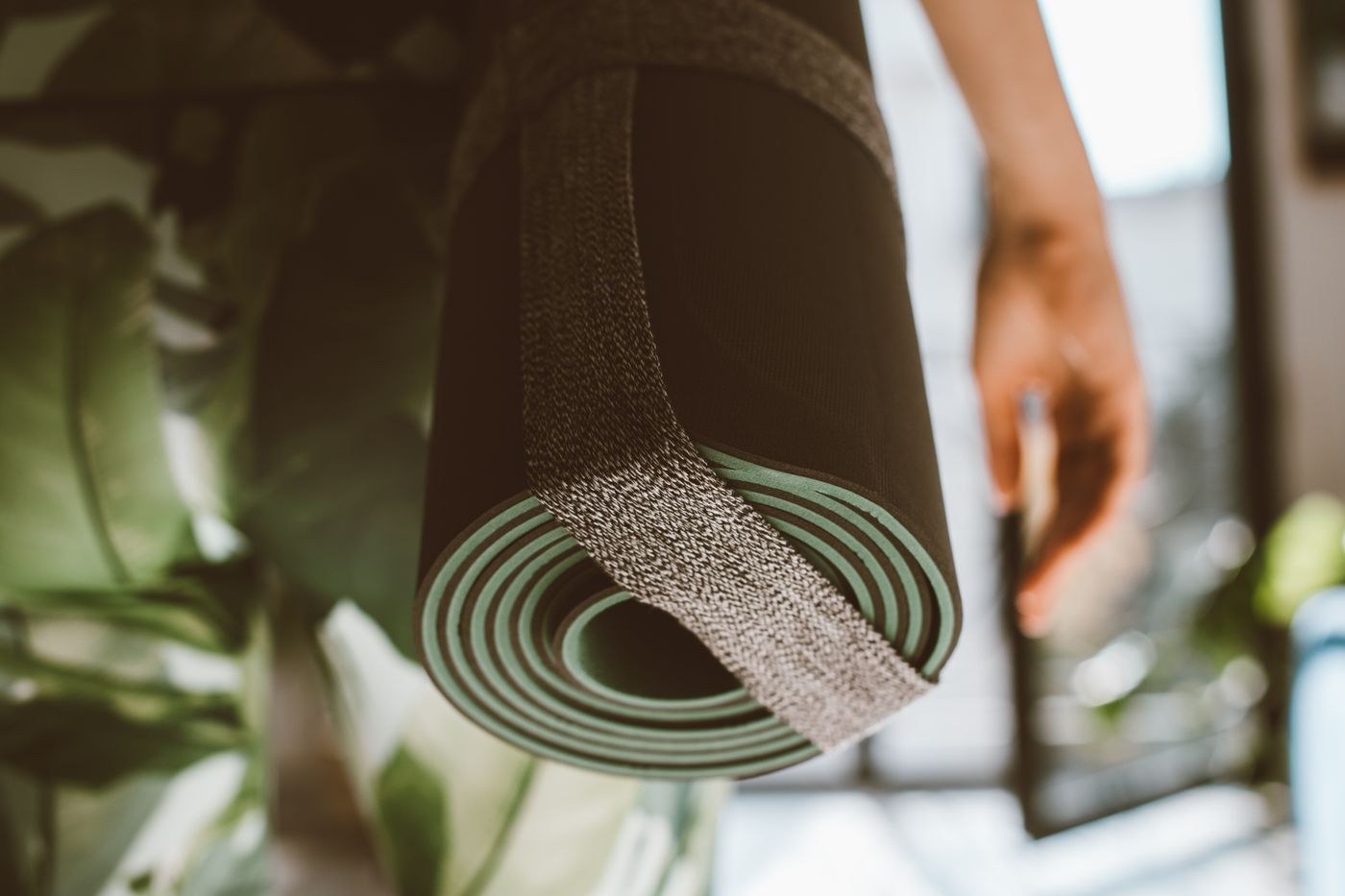
Measure the rolled or folded size. A large mat may be easy to use at home but awkward on a bus or in a shared cupboard. A strap or bag should hold it securely without leaving long loops that catch on doors. Check whether the product should be rolled or folded; forcing it into a different shape can damage it.
Read the care instructions before buying if you need a particular cleaning method. Some materials tolerate mild washing while others have stricter limits. Allow the mat to dry fully before storage and keep it away from conditions the maker warns against. A wipeable surface is useful only if the cleaning process fits your routine.
Compare two or three candidates using the same questions: Does it fit the movement? Is it stable on the intended floor? Can I carry it? Can I clean and dry it? Where will it live? These practical answers are more useful than a long list of marketing terms.
Do not pay extra for a promise that a mat will prevent all discomfort or injury. If an exercise is painful, a thicker mat may not address the cause. Change or stop the movement and seek guidance as appropriate. Buy the mat for its physical properties and intended use, then continue to check its condition over time.