Training kit
The socks you wear change the space inside a shoe. Try the complete combination before deciding that a size fits.
Use the socks you expect to train in, including their usual thickness. A fitting in thin everyday socks may not reveal pressure from a thicker heel or toe panel. If you normally use prescribed orthoses, follow your clinician's advice and try the shoes with those inserts rather than assuming they will fit later.
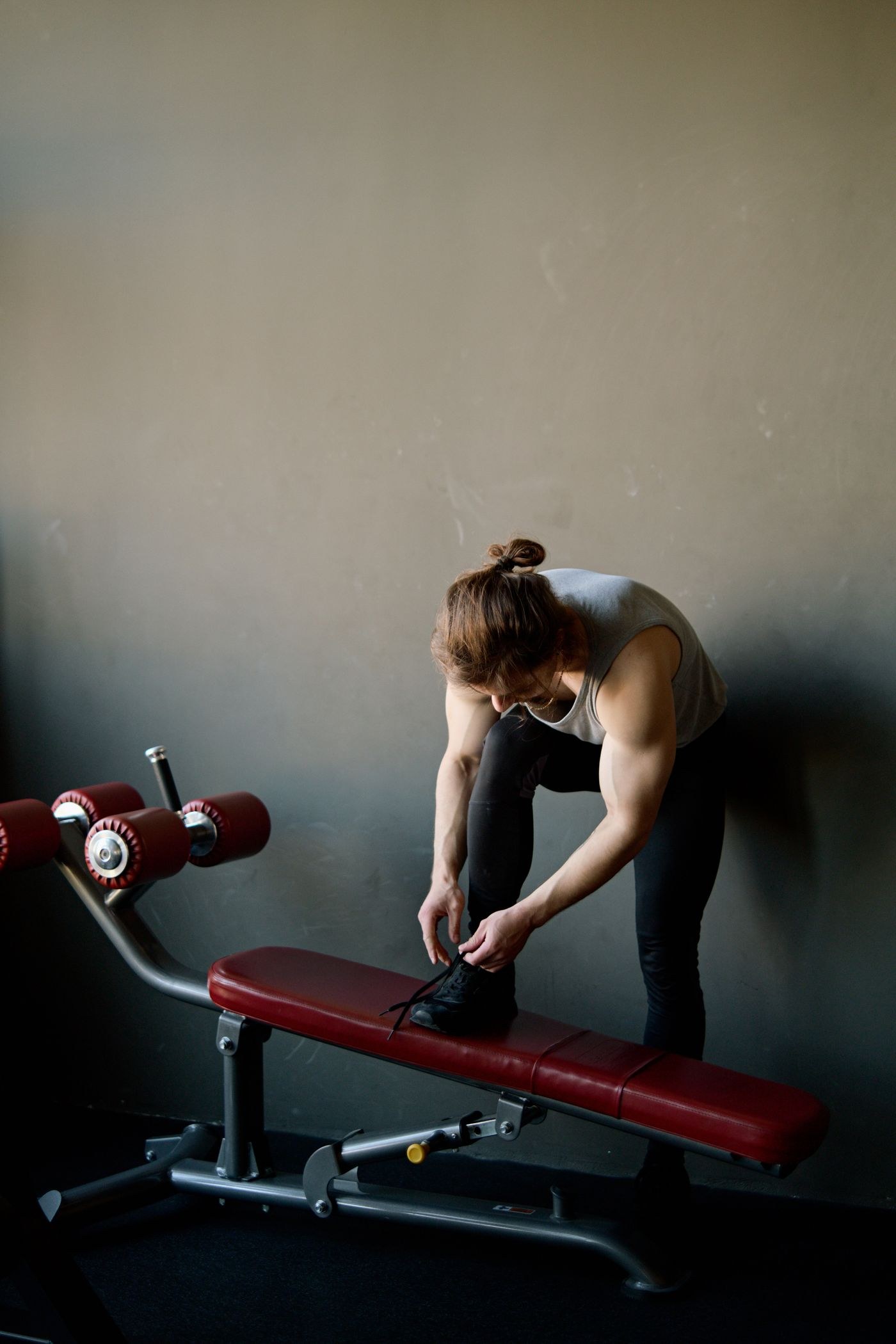
Try both shoes and fasten them as you would for a session. Feet are not always identical, so the more comfortable foot should not make the decision for both. Stand, walk and make a few appropriate gentle movements in the shop's permitted testing area. A seated try-on tells you little about how the shoe behaves under load.
Look for sufficient length, width and depth. Toes should not be squeezed together or pressed against the upper. A shoe can be long enough yet too shallow across the forefoot. Conversely, buying extra length to solve a width problem can leave the heel moving excessively.
Notice whether the heel stays secure without overtightening the laces. Pressure over the top of the foot, rubbing at the collar or a seam that you can feel immediately deserves attention. Do not assume a painful area will disappear after several workouts. Different shapes and widths may suit you better than a different number in the same model.
Understand the retailer's return conditions before wearing shoes outdoors. If indoor testing is allowed, repeat the fitting on a clean surface with the same socks and normal fastening. Keep packaging until you have made the decision.
Check the socks too. Bunched fabric, a twisted seam or a heel panel sitting in the wrong place can create a problem that looks like poor shoe fit. Wash and dry socks according to their instructions so their shape remains consistent. If a shoe only feels acceptable with unusually tight lacing or by changing how you walk, choose another option. Persistent foot pain, numbness or a medical foot-care concern needs individual advice rather than repeated experiments with shoe sizes.