Training kit
An exercise step needs a secure base, enough foot space and a height appropriate to the movement. A household stool is not an equivalent substitute.
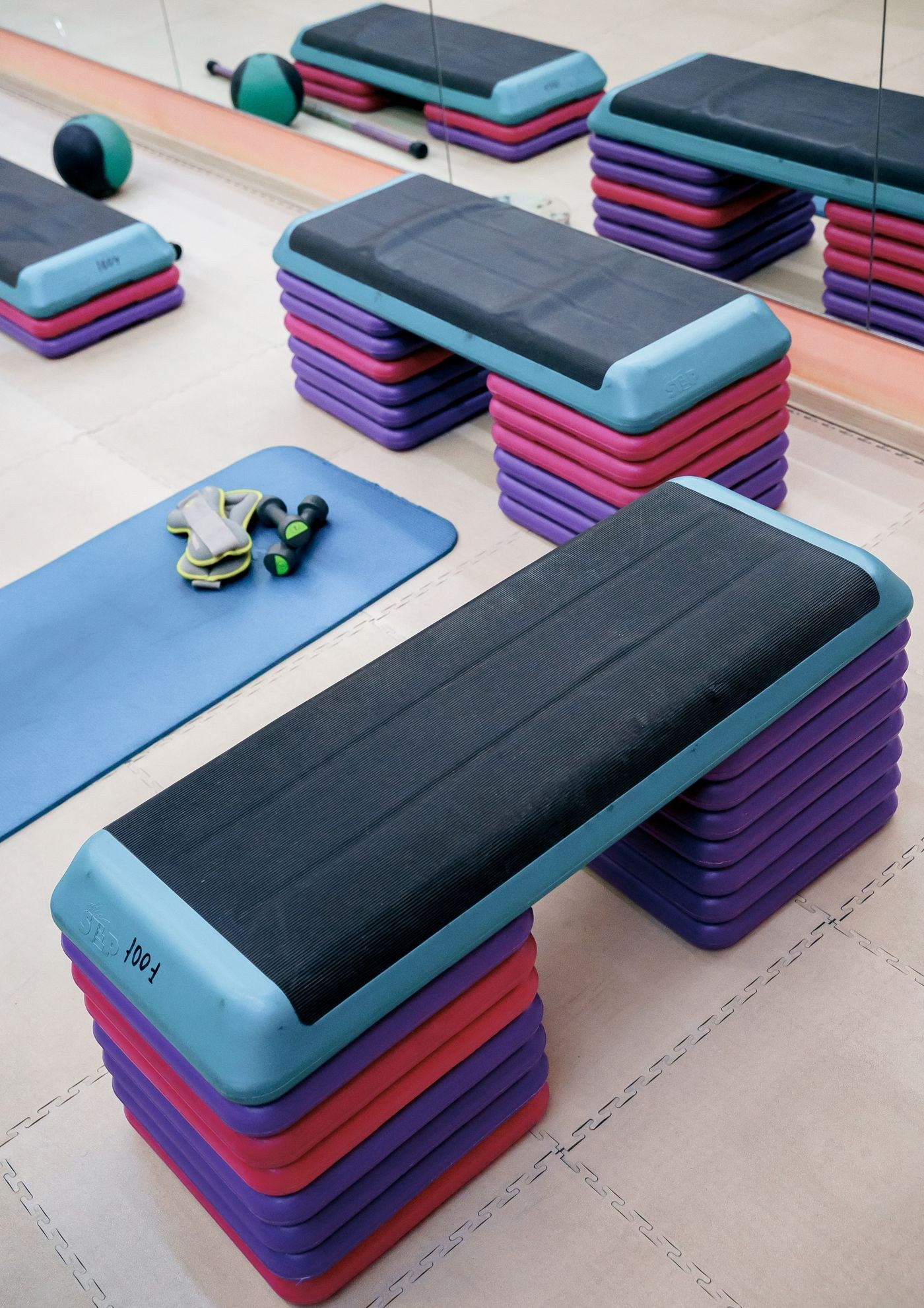
Look for a product designed for the intended exercise and read its load limits and assembly instructions. The top should provide enough usable area to place your foot securely. A narrow platform may encourage you to land partly off the edge, particularly when learning.
If height is adjustable, understand how the risers lock or seat into place. Use the matching parts in the permitted arrangement. Do not stack loose blocks, books or spare risers beneath it to create a height the manufacturer has not specified. Check the complete assembly before each use.
A higher step changes the demand of the movement. It is not a better choice simply because it offers more height settings. Begin with a suitable low height and controlled movement under appropriate guidance. You should be able to step down with control as well as step up.
Consider where stable support is available if the exercise calls for it. NHS balance guidance suggests a step near a wall or railing for support. A movable chair placed nearby is not automatically equivalent to a fixed, suitable support, and a crowded corner may leave too little room to recover balance.
A step sold for reaching a cupboard or getting into a vehicle may have a different intended use from an exercise platform. Check the description and instructions rather than choosing by appearance or a single load figure. Repeated stepping and changes of direction need to be within the product's specified use.
If buying online, look for clear dimensions of the top surface, the base and each permitted height setting. Ask for missing information before ordering. Product photographs can make a platform look wider or lower than it is, especially when no person or measurement is shown.
For shared use, choose a setup that can be adjusted deliberately between users rather than during a fast circuit transition. Everyone should know which risers belong to the platform and how to check their engagement. Keep spare components together and remove the step from use if a foot, riser or locking feature is missing. A platform that looks level can still be assembled incorrectly.
Set the step on the type of level surface the maker specifies. Inspect non-slip feet and the top surface for wear, dirt or moisture. Do not place it across a rug edge or on thick padding that allows it to rock. If it moves during a gentle setup check, resolve that before exercising.
Allow clear space in front, behind and beside the platform. Keep unused risers stored securely rather than beside your landing area. Consider noise and the needs of neighbours if using it in a flat; a mat cannot guarantee that repeated impacts will not carry through the floor.
When shopping, measure both the operating footprint and the storage space. A folding design introduces hinges and locks that need checking, while a fixed platform may be simpler but bulkier. Choose the one you can assemble, inspect and put away correctly. If those tasks feel awkward in the available room, another exercise may be more practical.