Training kit
Adjustable dumbbells can reduce the number of separate weights in a room, but their mechanisms and operating space deserve careful comparison.
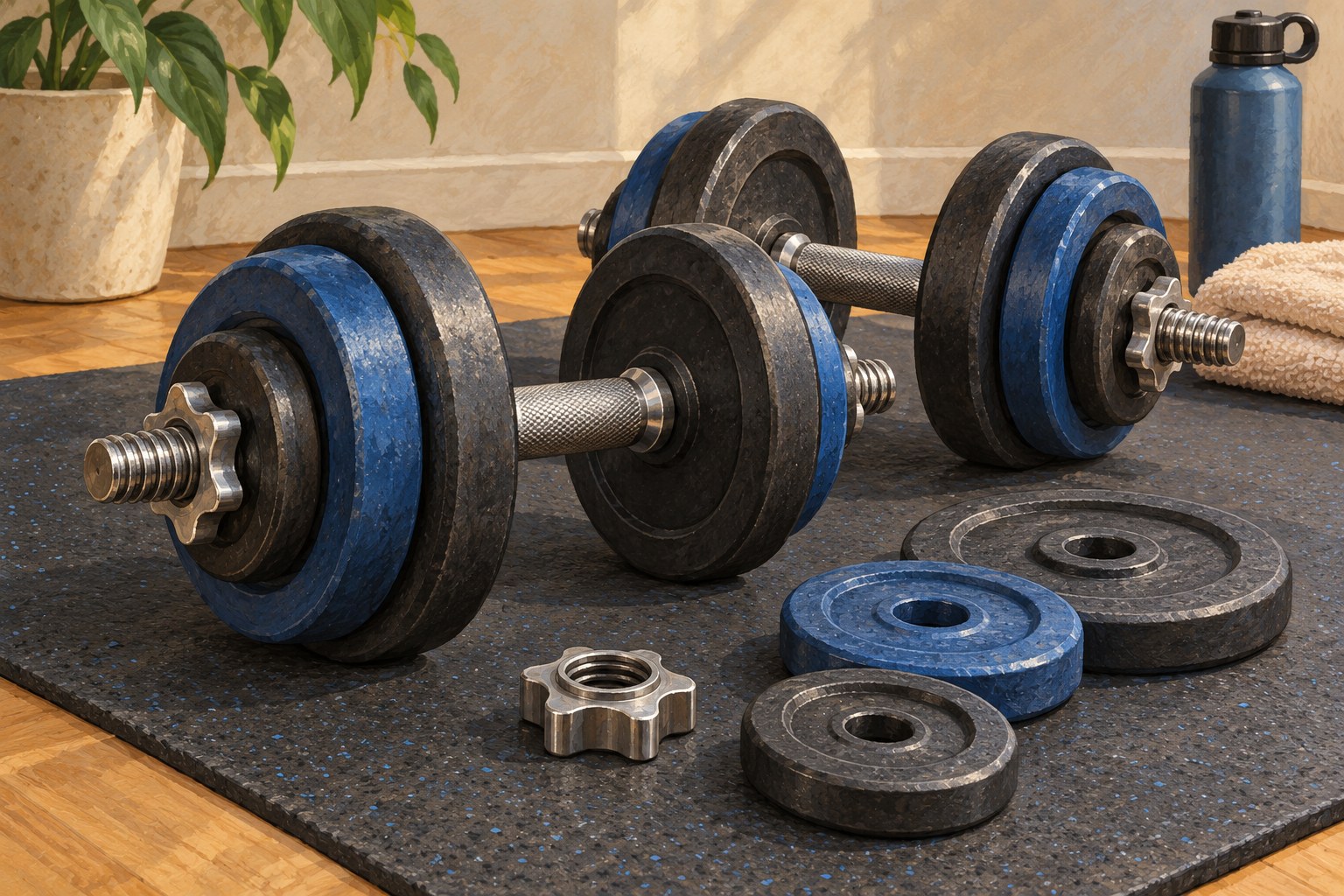
Measure the dumbbell, its base and any stand, then allow room to lift it out without hitting nearby furniture. The advertised storage footprint may not include the space needed to select a weight or reach the mechanism. Check where your feet will go while you lift and replace it.
Look at the size in use as well as the size in storage. Some designs remain long at lighter settings; others become more compact. This can affect clearance during movements. A product that fits neatly in a cupboard may still feel awkward in the exercises you intend to perform.
Different designs use selectors, pins, threaded collars or other locking systems. Read the exact model's instructions before purchase. You need to know how to change the load, how to confirm engagement and which parts must be seated in the base during adjustment.
Do not assume that a click alone proves every plate is secure, or that a procedure learned on another model applies. Follow the manufacturer's check without improvising a test above your head or feet. If the selector sticks, a plate is misaligned or the mechanism behaves differently, stop using it and seek the maker's advice.
Check the permitted exercises and handling limits. Some adjustable weights are not designed to be dropped, used as press-up handles or loaded in particular orientations. Those restrictions matter even if a promotional photograph looks similar to the movement you want to do.
Identify the manufacturer and exact model, not just the marketplace listing name. Look for accessible instructions, replacement-part information and a way to contact support. Search current product-safety notices using the model and any relevant batch or serial information before buying, especially second-hand.
Ask a used-equipment seller whether parts have been replaced or modified and whether the original base and attachments are included. A missing plate or improvised pin can turn an apparent bargain into unusable equipment. Do not accept a statement that a fault is harmless simply because the seller has continued using it.
Check whether replacement plates, handles and bases are available for the exact version, and whether using them requires an authorised service process. A range name may cover several generations whose parts are not interchangeable. Keep a photograph of the model label and retain the manual that matches the unit you buy.
Read warranty conditions alongside the expected use. Home and commercial use may have different terms, and moving or dropping equipment may affect support. A warranty is not a substitute for safe operation, but clear support arrangements make it easier to resolve a problem without attempting an improvised repair.
If two household members use different settings, agree to leave the equipment in the state required by its storage instructions. Each person should still confirm the selected load before lifting. Do not assume the previous user left the same weight you normally choose. This small operational detail matters more than how quickly a selector can be turned in an advertisement.
Weight changes take a different amount of time across designs. A fast interval circuit may not leave enough time to put the dumbbell down, adjust it correctly and check the setting. Plan longer transitions rather than rushing the mechanism.
Store the equipment as specified, on a stable surface inaccessible to children. Keep the base clean and free of objects that could interfere with seating. For a first purchase, weigh these tasks against the simplicity of a fixed pair. Space saving is valuable only if you can operate and inspect the equipment reliably every time.