Movement basics
A low step-up is easier to organise when the platform is stable, the whole foot fits and the way down is planned before you begin.
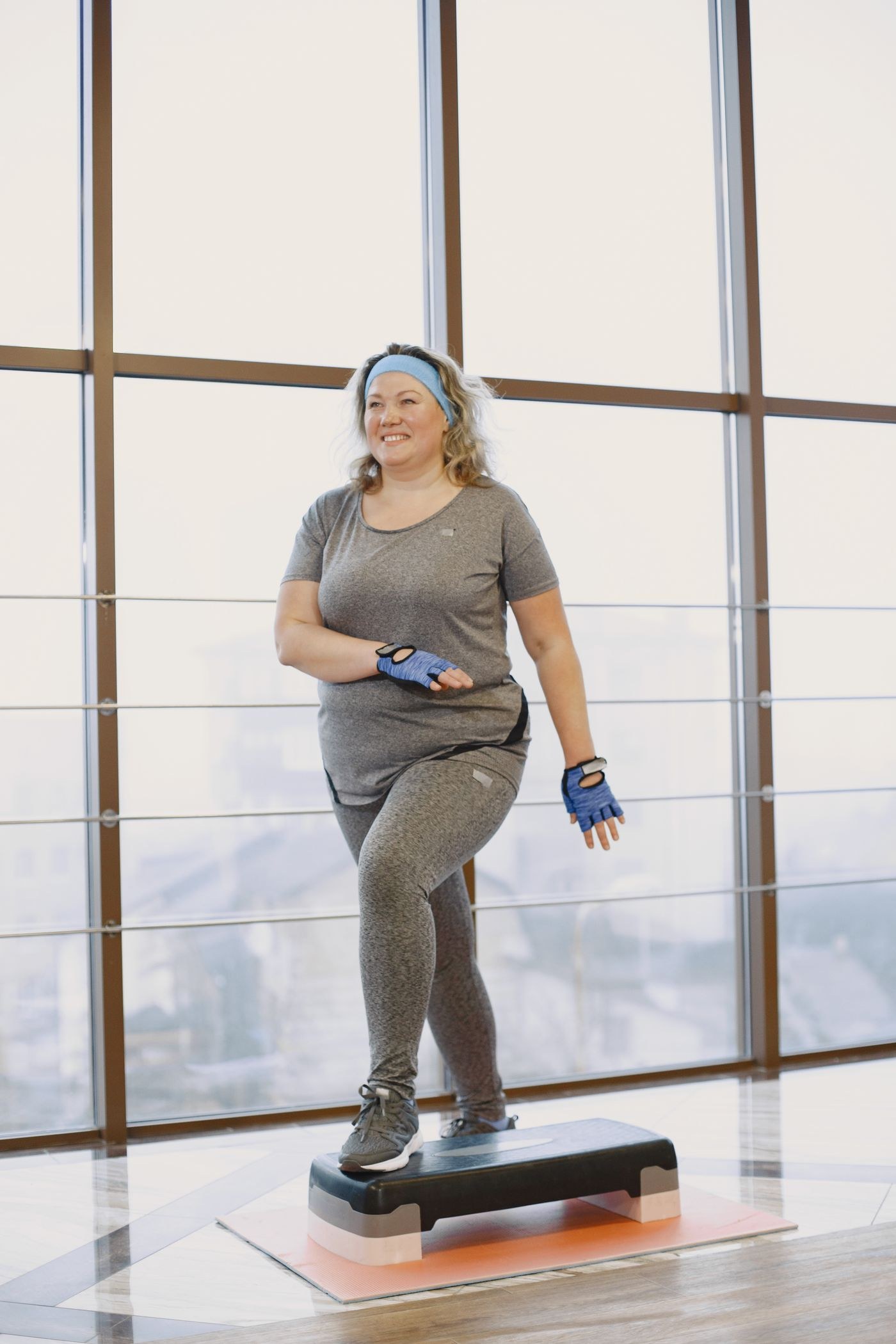
Use a purpose-made exercise step with its components correctly fitted, or another step that is suitable for the activity and has reliable support nearby. It must not rock, slide or compress. A stool, storage box or loose stack of objects is not a substitute simply because it is the right height.
Choose a low height for the first practice. Check that your whole foot can rest on the surface without the heel hanging off. Clear the floor in front and at both sides, including any mat edge that could catch a toe. A handrail or fixed support can help if it is positioned so you do not have to twist to reach it.
Place one foot securely on the step, rise in a controlled way and bring the other foot up if that is the version being taught. Step back down deliberately, checking where the landing foot goes. Avoid using a fast push from the floor to make an overly high step feel manageable.
Try a small amount with one leading leg, then change sides as instructed. Clarify how repetitions are counted, because a complete up-and-down sequence may be recorded differently from each individual step. The counting system should not distract you from placing the foot accurately.
If you cannot lower without dropping, use a lower platform or ask for another movement. Do not add dumbbells while the unweighted descent is uncertain. The step should remain still throughout; movement of the equipment is a reason to stop immediately and correct the setup.
If the platform is stable but your foot will not fit fully on it, use a different platform rather than balancing the heel over an edge. If the hand support is behind you, move the equipment or ask for another station; twisting to reach a rail can undermine the otherwise simple step. If the platform's risers are removable, have the instructor check that both sides are fitted correctly and that the intended height is level.
A step-up station can also become awkward because of traffic. Ask where the next participant will wait and whether you should step down backwards or follow another taught route. Do not invent a sideways exit while another person is approaching. These decisions belong in the setup, before the timer starts. If the available space cannot accommodate the movement and its support, choose another task for that session. There is no benefit in preserving the exercise name while compromising the surface, the foot contact or the way you get back to the floor.
Controlled step practice is not the same as racing up a staircase. A staircase adds multiple levels, turning points and a different consequence if you lose balance. Stay with the agreed single-step task rather than extending the route because the first attempts feel easy.
For home practice, choose a time when the area will not be used as a passage. Keep children, pets and other people clear of the landing space. If stepping causes pain or you feel unsteady despite support, stop and ask for individual advice. Platform height, amount of work and support can all be adjusted; speed does not need to be the next challenge.