Movement basics
Wall press-ups let you adjust the task through your position. Begin close enough to control the movement, with a wall and floor that provide reliable contact.
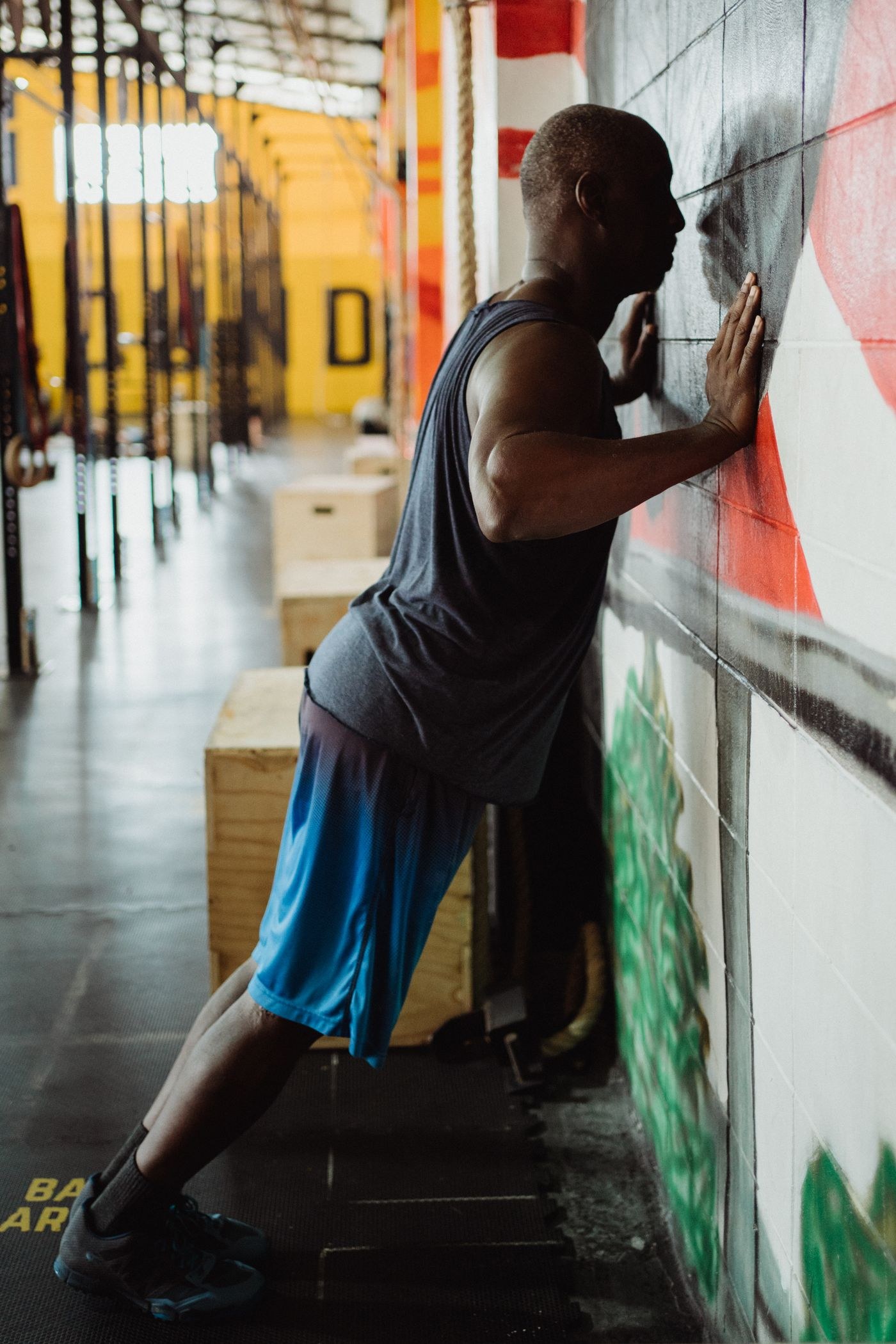
Choose a solid wall without shelves, pictures or a door that might open towards you. The surface should be dry and comfortable for your hands. Avoid pressing on a mirror, a glass panel or furniture that merely happens to be at a convenient height. Check that your footwear will not slide as you lean.
Place your hands around chest height and find a comfortable width. Start with your feet relatively near the wall, then test a small lean. You should be able to support yourself without feeling that your hands or shoes are creeping. If the surface is unreliable, change the location rather than trying to grip harder.
Bend your elbows to bring your body towards the wall, then press back to the starting position. Keep the movement comfortable and avoid letting the hips arrive well before the chest. A small range is enough to learn where the weight goes. You do not need to bring your nose all the way to the wall.
Let the return be deliberate rather than pushing yourself away sharply. Keep breathing and stop before you need to rush through the last part of the movement. If your shoulders or wrists hurt, do not assume that changing the hand angle repeatedly will solve the cause. Pause and ask for suitable advice or another exercise.
An instructor can watch from the side to help you judge the body position. Looking sideways into a mirror throughout the repetition can twist your neck and distract from the task. Ask for feedback between attempts instead.
Moving the feet farther away generally places more demand on the arms, but the useful distance is the one you can control. Marking a starting point mentally, such as a floor tile, can make practice repeatable. Do not increase distance and repetition count together simply because the first attempt went well.
Stay with the wall version for as long as it serves your programme. Progressing to a lower support is a separate decision that introduces new questions about support strength and footing. A stable, controlled wall press is more useful than a harder-looking version performed on a surface that can move.