Movement basics
Seated knee extensions can be practised without added weight. A stable chair and a comfortable range make the movement easier to observe.
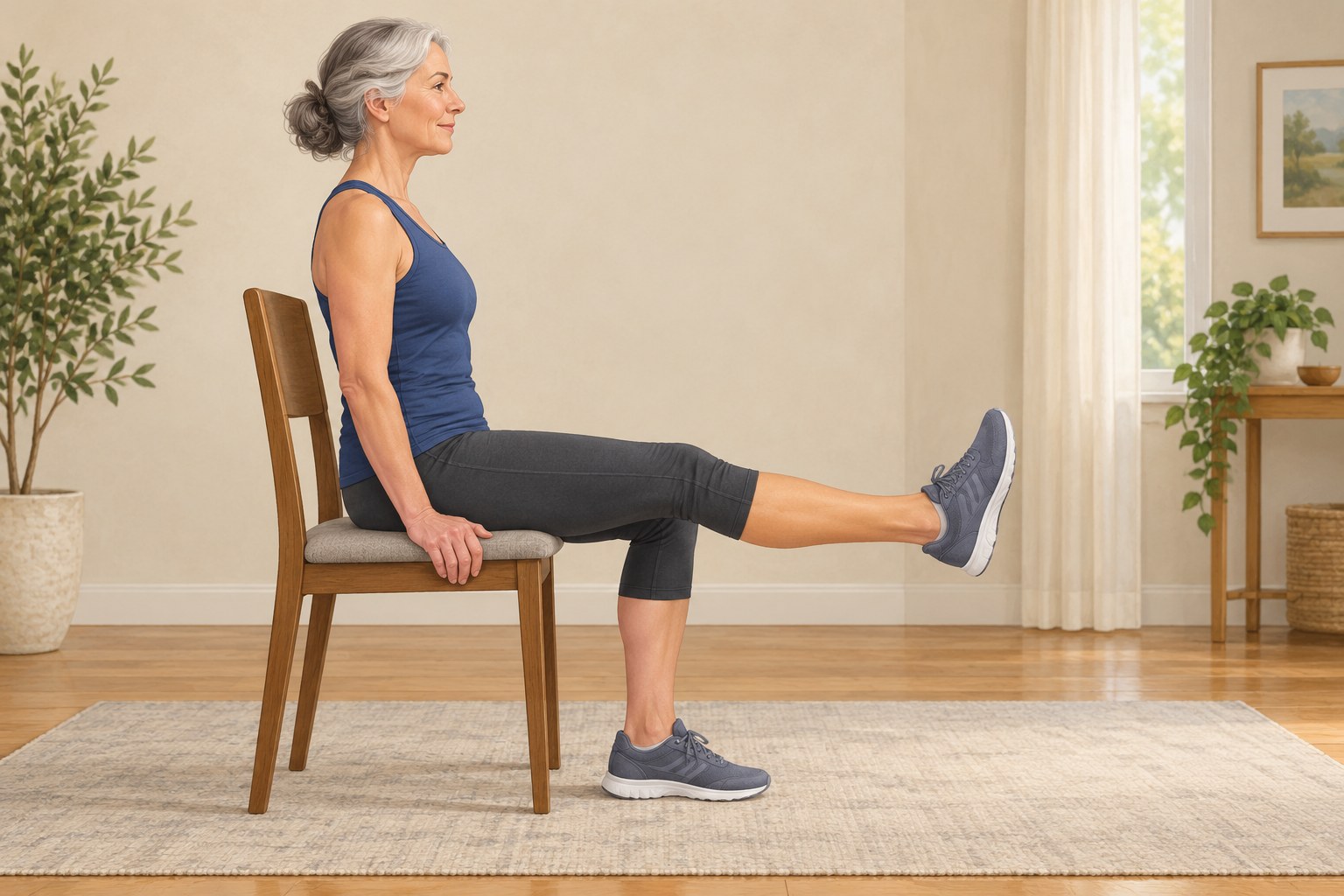
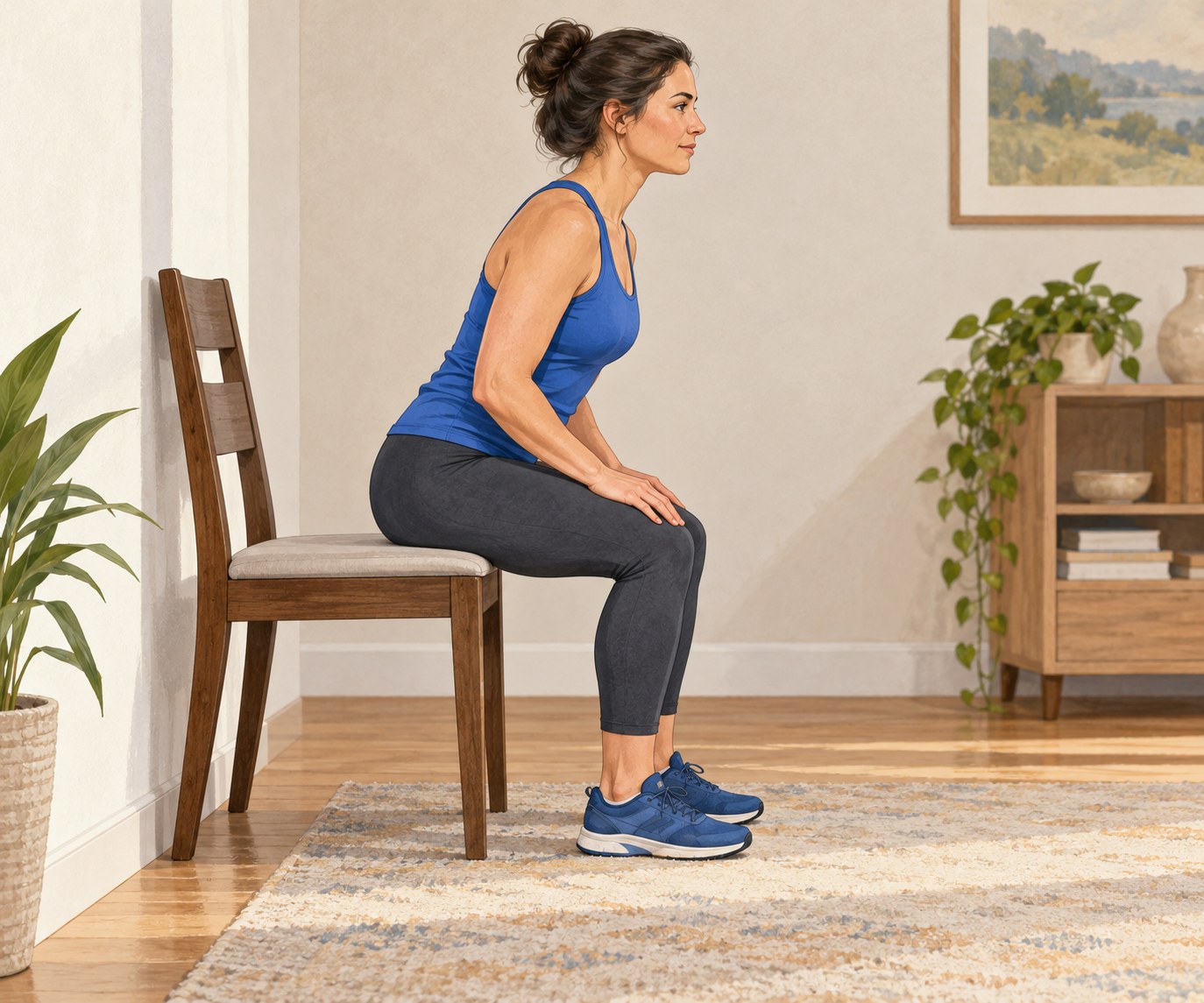
Choose a firm chair that cannot roll or slide. Sit with enough support under the thighs and room for the lower leg to move forwards without hitting a desk or another chair. Keep the supporting foot on the floor and your torso comfortable. If the chair is so high that both feet dangle, use a more suitable seat.
The exercise is a deliberate movement, not repeated kicking while working at a computer. Move away from sharp furniture edges and give yourself a moment to focus. If you have a recent knee injury, surgery or individual rehabilitation instructions, follow the advice of your healthcare professional rather than replacing it with a general article.
Slowly straighten one knee through a comfortable range, then lower the foot under control. Do not snap the knee straight or lift the whole thigh to make the foot travel higher. A brief pause can help you notice the position, but a long hold is not required to learn the movement.
Keep the trunk reasonably still instead of leaning backwards with every lift. If the chair edge presses uncomfortably into the thigh, stop and adjust the seat or position. Ask for guidance if you cannot find a comfortable setup; the movement should not depend on enduring pressure from the furniture.
Repeat the version and amount you have been shown, then change legs as appropriate. Clarify whether a written repetition count refers to each leg or to both together. There is no need to attach an ankle weight simply because the unweighted movement looks small.
A seated extension is one exercise option, not a complete lower-body programme or a test of knee health. Avoid interpreting a difference between sides as a diagnosis. Note it and seek advice if it concerns you, especially when accompanied by pain, swelling or instability.
If the exercise is comfortable, keep the setup consistent so you can recognise changes in control. Progression, when appropriate, can be discussed with an instructor or clinician involved in your care. Do not add resistance to an uncertain or painful movement merely to make it feel more like gym training.