Movement basics
Before choosing floor exercises, establish how you will get down and stand up again. The transition deserves its own time and, when uncertain, individual instruction.
A floor exercise can look simple while its entry and exit are difficult. Kneeling, supporting yourself through the hands or rising from a low position may not suit your current circumstances. You can choose standing or seated alternatives instead of treating floor access as an admission requirement for exercise.
If you have a history of falls, significant balance concerns, recent surgery or uncertainty about getting up, ask a physiotherapist or another appropriate professional to show a method that suits you. Do not conduct a solo test to discover whether you will be able to rise. Having a phone nearby is useful, but it does not replace a suitable plan or support.
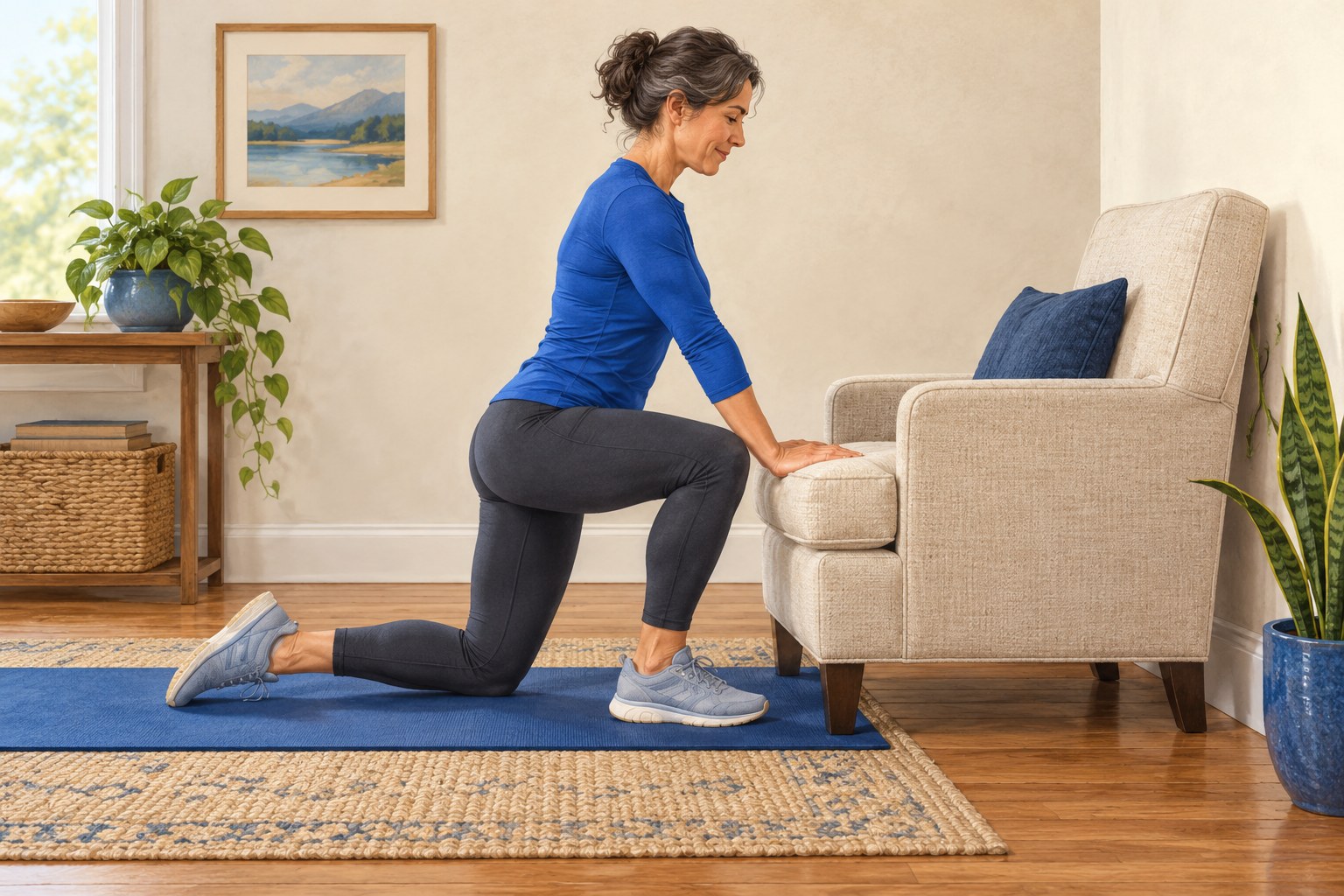
Use a clear floor area with a mat that does not slide. Remove weights, bags and anything that could obstruct the knees or feet. If a stable support is part of your agreed method, check that it cannot tip or move and that it is placed within reach at the point you will need it.
Ask an instructor to demonstrate the transition before the class begins, while there is time to practise without a timer. Explain which parts are difficult: lowering to one knee, bearing weight through a wrist or bringing a foot forwards, for example. Those details help them decide whether they can teach a suitable option or should refer you for specialist advice.
Do not rely on a friend pulling you up by the arms. Helping another person move safely requires appropriate knowledge, and an improvised lift can hurt both people. If assistance is needed, agree how it will be provided rather than discovering that need halfway through a session.
Some people use a supported half-kneeling position when moving between standing and the floor; others need a different approach. The sequence should be demonstrated for your circumstances. Learn where each hand and foot goes, where to pause and how to reverse the movement if you decide not to continue.
Practise without holding weights or a water bottle. Place equipment within reach only after you are settled, and set it down before rising. Trying to stand while carrying a dumbbell removes a hand you might need and changes the balance of the task.
Leave time to pause after changing position. A class may switch quickly between floor and standing exercises, but you do not have to follow that speed. Tell the instructor if you need to group floor exercises together or remain in a different position. A programme can be adjusted around the transition instead of repeatedly rushing it.
After a fall, first consider injury and the need for help; do not automatically apply a practised exercise sequence. Follow appropriate emergency or healthcare advice. NHS Inform provides separate guidance on what to do after a fall, including getting help when you cannot rise safely.
For ordinary exercise, success is having a method you understand and can use without a hurried last effort. If that method is not available today, choose a different position. The floor is one possible training surface, not a place you need to reach to prove independence or complete a class properly.