Movement basics
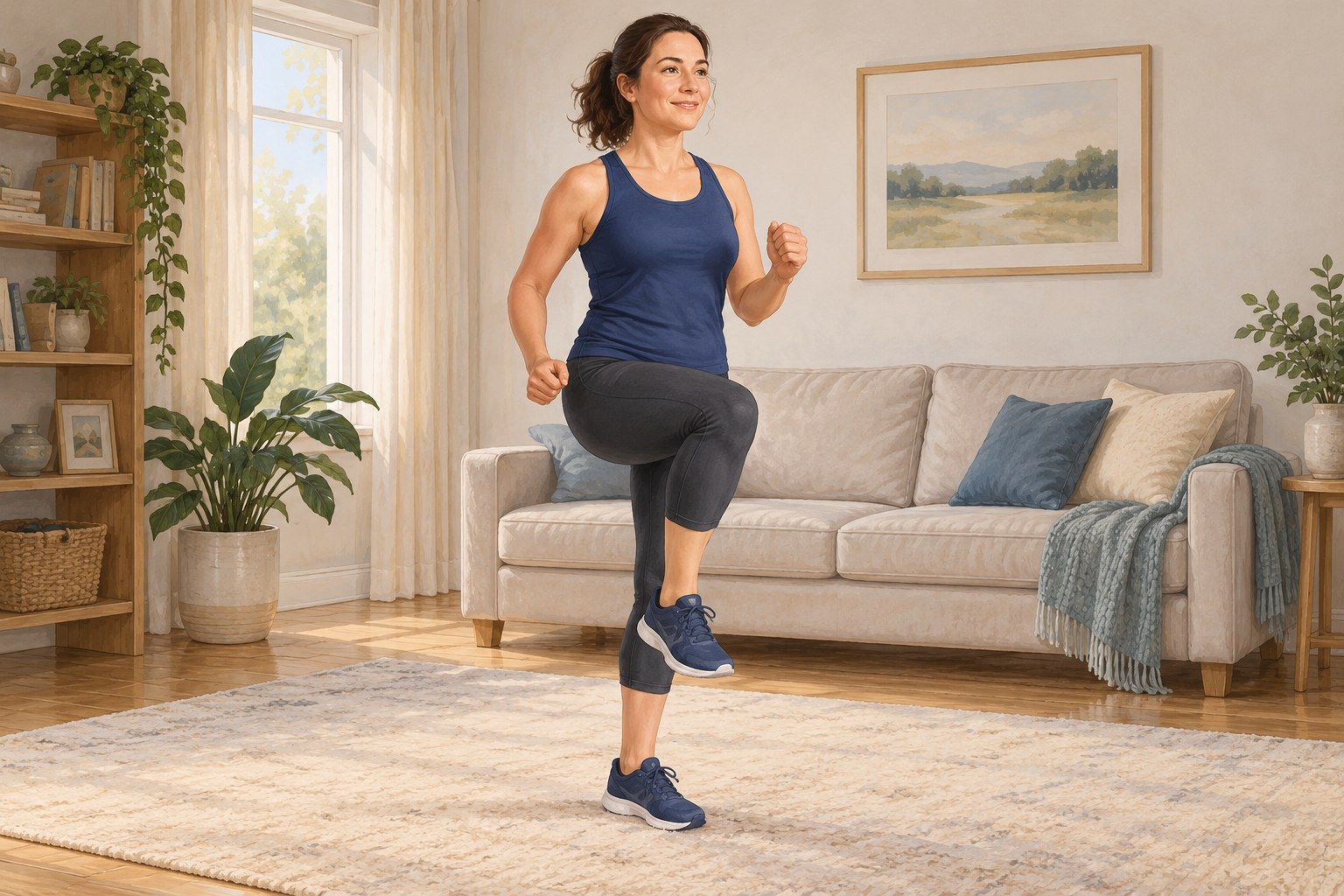
Marching on the spot can provide a brief change from sitting when there is little room to walk. It does not need to become a vigorous workout.
Stand where your feet will not catch a chair leg, cable or curled rug. Move away from a desk edge before beginning rather than marching while holding a mug or reading a screen. If you want support, use a fixed surface that is comfortably within reach and will not move when touched.
Start with gentle alternating steps and a height that feels easy to control. There is no requirement to lift the knees to hip level. Let the arms move naturally if space allows, or keep the movement smaller beside a support. The purpose of a brief break is to change position and move, not to match a video demonstration's pace.
Choose footwear and a surface that give secure contact. Slippery socks on a polished floor can make a simple movement unnecessarily uncertain. If standing is uncomfortable or unsuitable, a seated movement break may be a better option to discuss with a professional who knows your needs.
Link the movement to a natural pause, such as finishing a call or saving a document, rather than interrupting a task that needs concentration. Put work aside while moving. Watching a complicated presentation and trying to follow an exercise sequence at the same time defeats the purpose of a clear, manageable break.
Keep the effort comfortable and reduce the pace gradually before returning to your seat if that feels appropriate. If you become dizzy, have pain or feel unwell, stop and seek advice as needed. A small movement is not automatically suitable in every circumstance merely because it happens beside a desk.
Do not assume that a few marching breaks replace all other activity. They are one way to interrupt a long period in the same position. You can alternate them with short walks or other comfortable changes during the day. Notice which option fits your space and helps you return to work without making the break itself a complicated routine.