Movement basics
An overhead press adds a load above the body. Start by checking the space, the unweighted movement and how you will bring the weights back down.
Check ceiling height, lights, fans and anything hanging over the training area. Allow space for the full intended movement, not just for standing upright. Move away from doorways and other people's stations. A low ceiling is a reason to choose another exercise, not to press around an obstacle.
Try raising the arms without weights in the range the instructor demonstrates. If that is painful or requires a large backward lean, do not add resistance to force the position. Ask for an appropriate alternative and individual advice where needed. Overhead movement is not compulsory in every general exercise session.
Use a light pair of dumbbells and a comfortable stance. Bring them to the starting position with control, keeping the wrists reasonably aligned with the forearms. Ask an instructor to show a grip and arm path that suit you. Do not pull a heavy weight up from the floor and assume that reaching shoulder height means it is suitable to press.
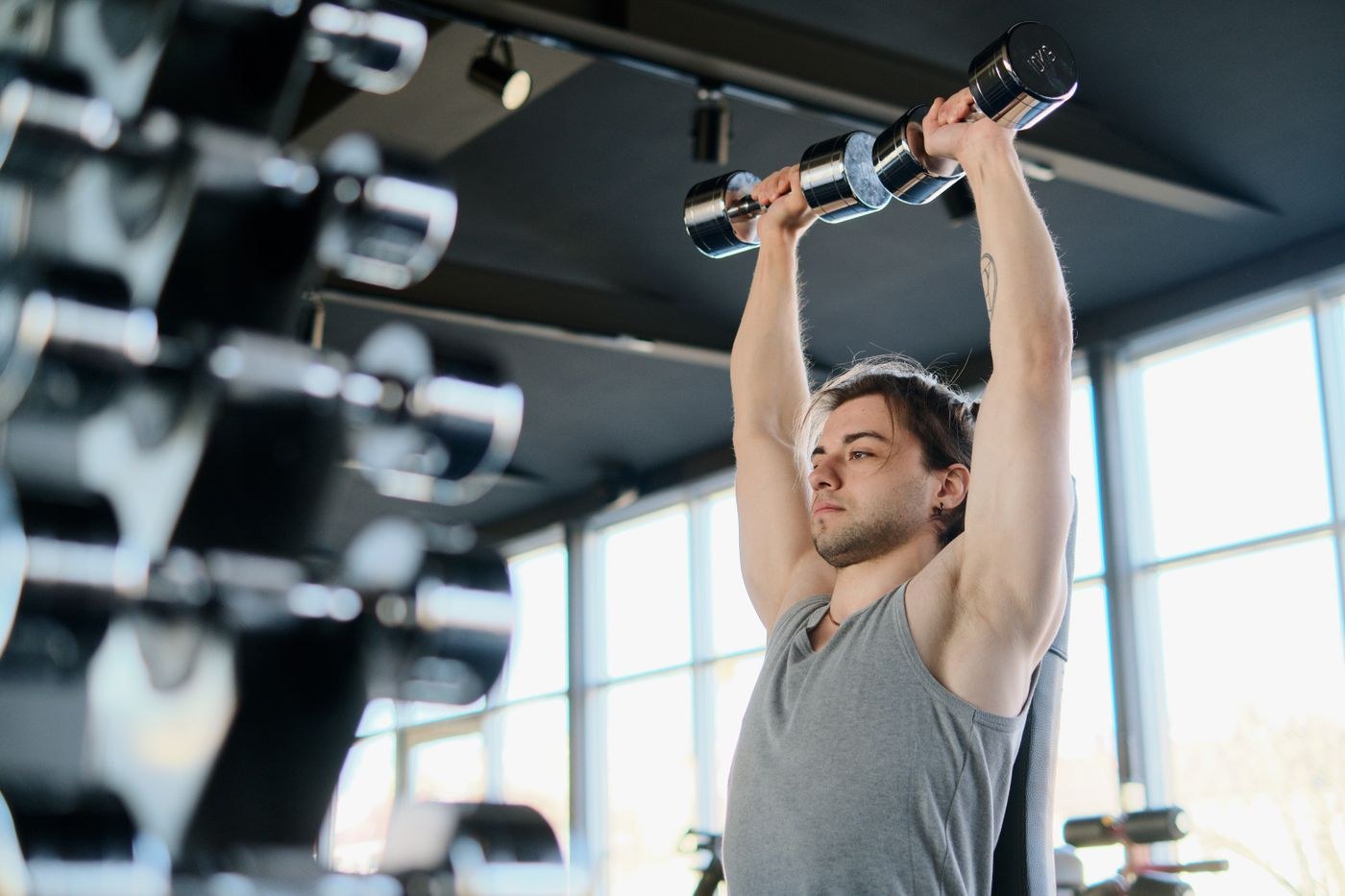
Press upwards through a comfortable path, then lower deliberately to the starting position. Avoid using a knee dip and a forceful leg drive unless you are specifically learning a different exercise. For this basic press, momentum can hide a load that is too demanding.
Keep breathing and avoid leaning progressively farther backwards as the arms rise. If the finish of each repetition changes, reduce the load or range with guidance. You do not need to touch the dumbbells together overhead, and there is no reason to hold them there while waiting for the next instruction.
End the set while you can lower the dumbbells to the starting position and then put them away carefully. Keep the route to the rack clear, and do not step over other weights while carrying them. The final handling is part of selecting a manageable load.
A seated version changes the setup but does not automatically solve discomfort or make the movement suitable. If you use a bench, have its position and support checked. Record the version and load you actually used so the next session can begin from a known point rather than a guess based on what another participant lifted.