Movement basics
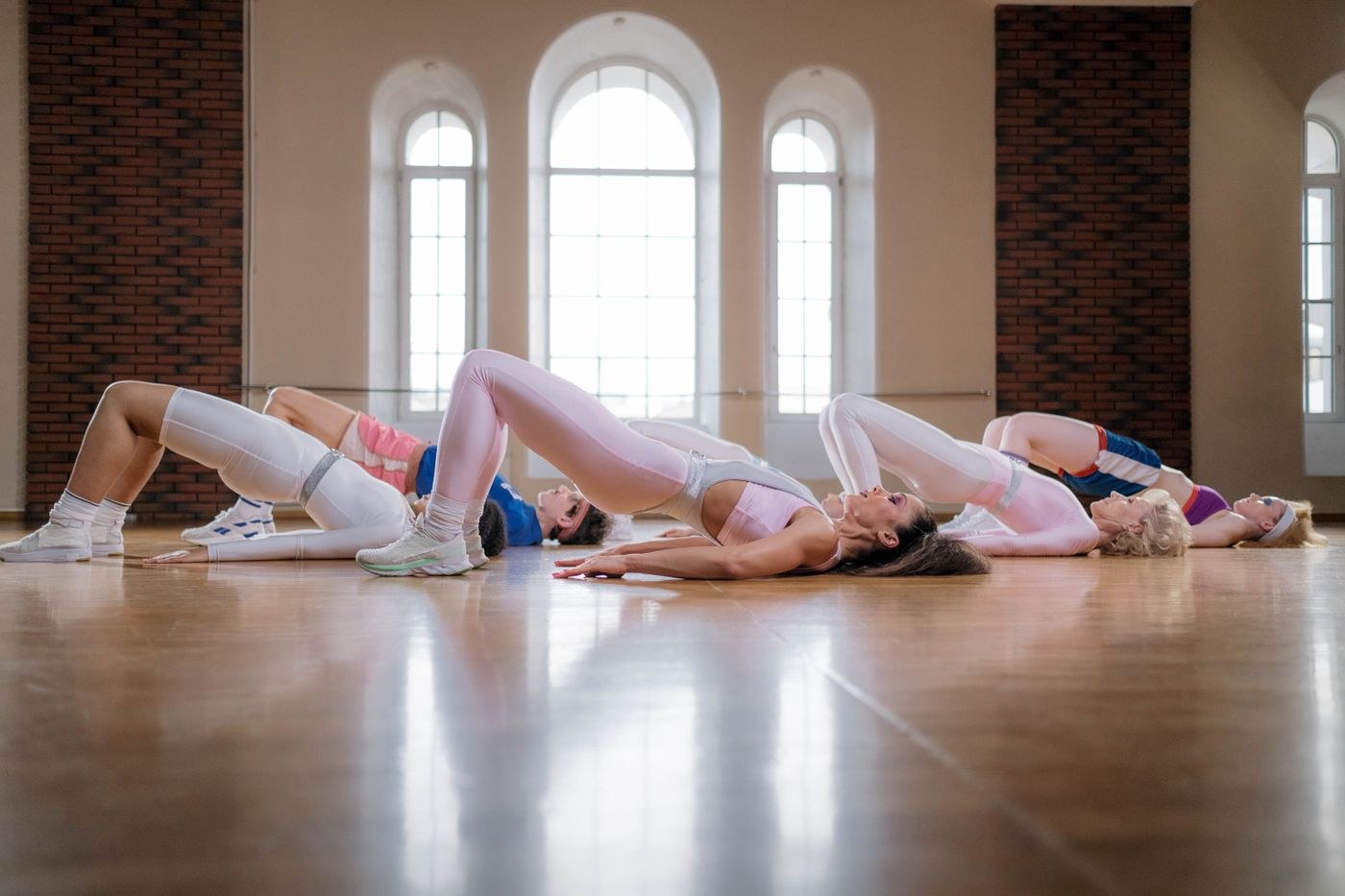
A floor bridge is a controlled lift of the hips from a lying position. The useful range ends before you have to arch your back to go higher.
Use a mat on a firm, level surface with enough room for your arms and feet. Check that you can get down and return to standing comfortably; if that transition is difficult, ask for another exercise or supervised help rather than testing it alone. A thick, soft mattress is a different surface and may make the position less predictable.
Lie on your back with knees bent and feet flat, using a comfortable width. Rest the arms beside you. Adjust the feet before starting so you do not have to shuffle them during each lift. If lying flat is unsuitable for you, this is not the right version to force.
Press through the feet to raise the hips, then lower them slowly to the mat. Keep the head and shoulders resting rather than turning to look at the side of the room. The movement should come from lifting the hips, not pushing the stomach upwards and increasing the back arch.
Pause between repetitions if that helps you reset. A higher lift is not automatically a better one. If the feet slide, the knees move unpredictably or the lowering becomes a drop, stop and check the position. There is no need to hold the top for a long time while learning the basic motion.
Keep breathing instead of bracing with a held breath throughout the set. If you experience pain or cramping, lower with control and rest. Do not immediately add a band or a weight to make the movement feel different; first establish whether the basic version is comfortable and suitable.
Use the same mat and approximate foot position when comparing practice. Notice whether the rise and lowering feel smooth, rather than chasing a particular height. If an instructor has given you a cue that helps, write it beside the exercise in your notes.
Single-leg bridges, elevated feet and loaded versions introduce different demands. They are not compulsory next steps. Repeating a modest, controlled bridge can remain useful within a programme, and a different exercise may be preferable if the floor position does not suit you.