Movement basics
A dumbbell floor press needs a manageable load for the setup and finish as well as the pressing movement. Rehearse those transitions before the first working set.
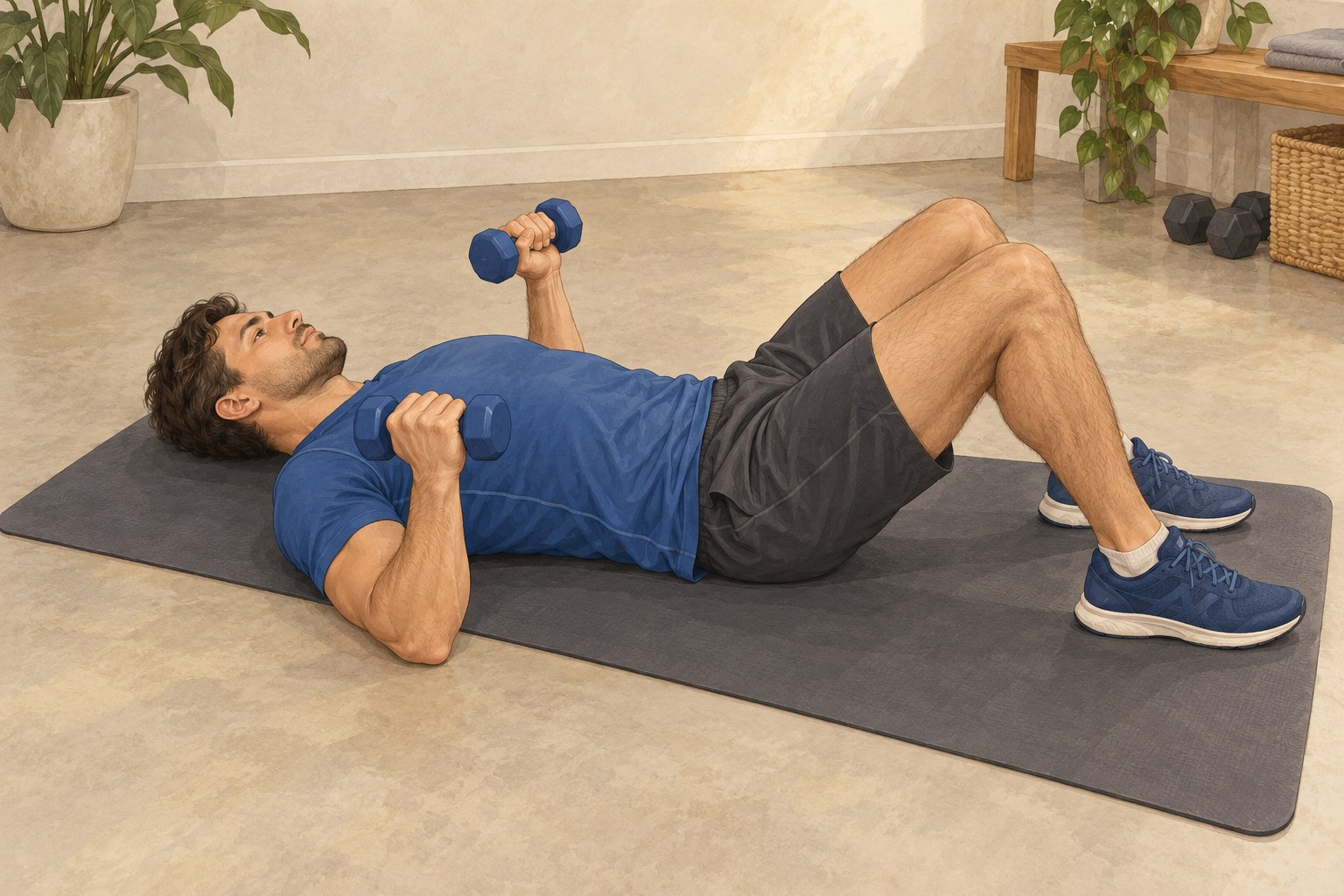
Use a firm mat with clear space beside both arms and around your feet. You need to be able to get down, lie comfortably and return to standing without juggling weights. If those transitions are difficult, ask an instructor for a different pressing exercise or supervised help. A floor press is not automatically easier simply because it does not require a bench.
Begin with dumbbells light enough to position and put down deliberately. Avoid a load that you can press only after somebody has placed it in your hands unless you are working within a properly supervised arrangement. Do not use a barbell as an interchangeable substitute; its handling and safety requirements are different.
Ask a qualified instructor to demonstrate how to bring the dumbbells into position from sitting and how to set them down afterwards. Practise that sequence with very light weights or empty hands first. The exact arrangement should suit your mobility and the equipment, rather than being copied from a fast lifting video.
Once lying on your back, keep the feet comfortably planted and the weights under control. A neutral or slightly turned grip may be used depending on the demonstrated version. Keep the wrists aligned with the forearms rather than letting the dumbbells tip backwards. Do not move a weight over your face while searching for the starting position.
From the bent-arm position, press the dumbbells upwards under control and lower them deliberately. Keep the upper arms in a comfortable angle to the torso rather than forcing them straight out to the sides. The floor limits how far the upper arms can descend, but it does not make bouncing the elbows or upper arms acceptable.
Touch down gently if the taught version brings the upper arms to the mat, then begin the next press without a rebound. Keep the head resting and avoid turning to look at another participant while the weights are raised. The two dumbbells do not need to collide at the top.
If one arm moves unpredictably or you have to arch strongly to continue, end the set while you can still lower the weights. Reducing the load is more useful than forcing the planned repetition count. Pain, numbness or a sense that the shoulder is unstable is a reason to stop and obtain appropriate advice, not to search for a faster pressing rhythm.
Lower using the sequence you rehearsed, set the weights securely aside and then get up. Do not drop them beside your ribs or feet. Leave enough clear floor space that a dumbbell cannot roll towards another person. If the equipment has adjustable ends, check its locking system before use and follow the manufacturer's instructions.
Record the load, grip and comfortable range rather than comparing floor-press numbers directly with a bench press. The available movement differs. Progress may mean a more consistent path or a calmer setup before it means a heavier pair of dumbbells. When you cannot explain how you will start and finish safely, get instruction before adding resistance.