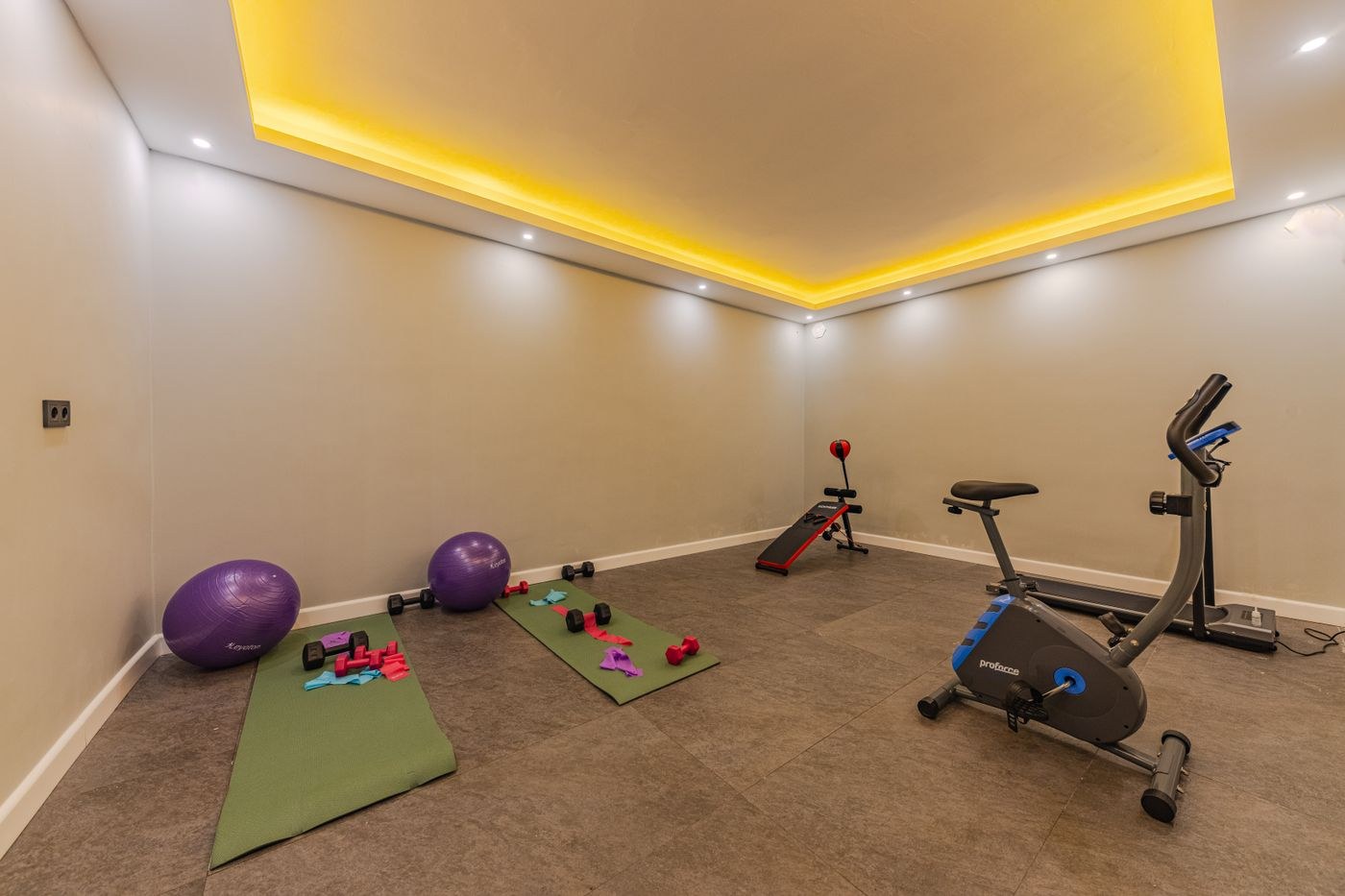
Home & outdoors
A level patch of ground should let you concentrate on the exercise rather than continually correcting for a slope or an uneven landing.
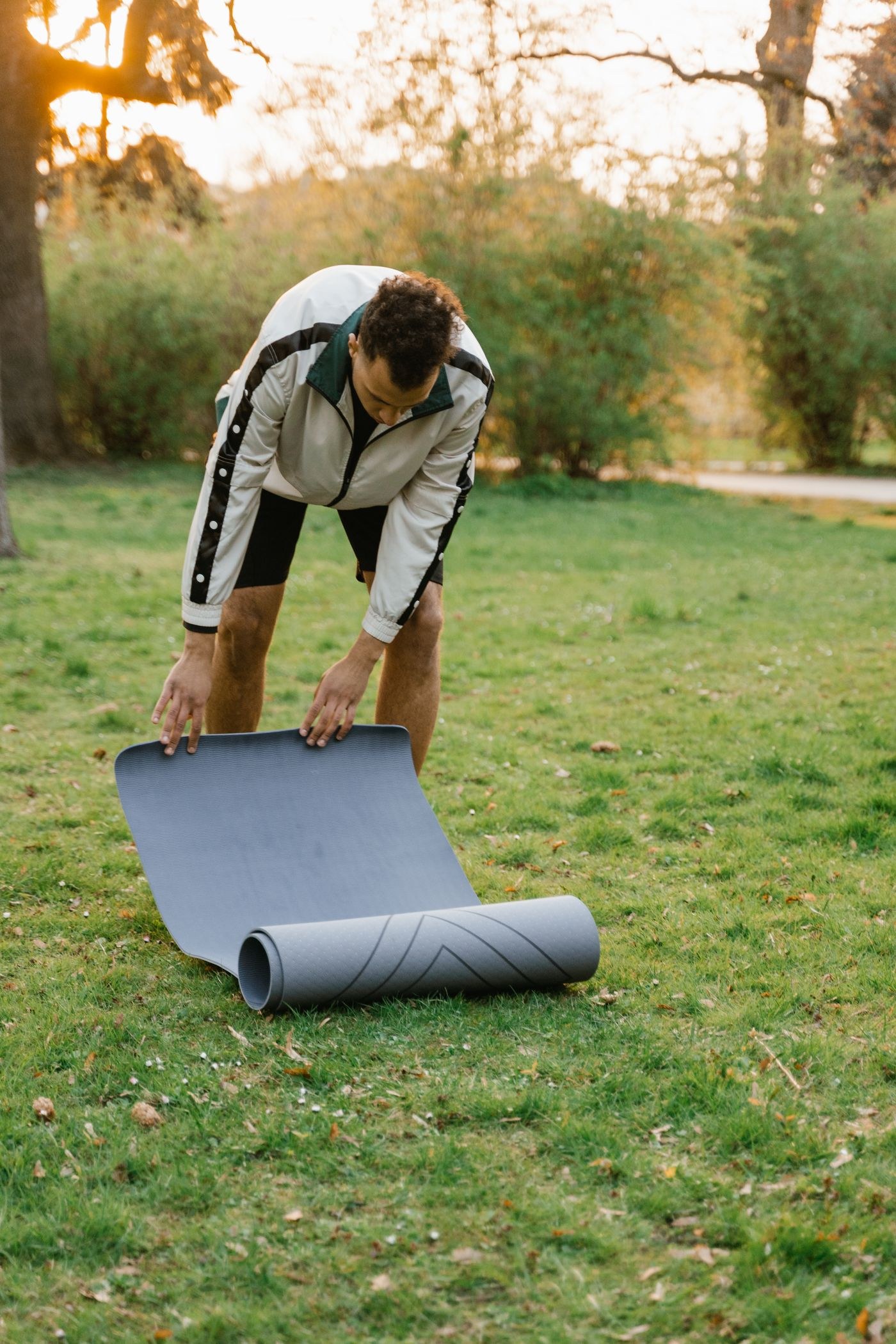
Start with the space the whole movement requires. A standing exercise may need only a small footprint, but side steps, carries and transitions need a clear route. Check the beginning, middle and end, including where you will put equipment down. A slope that seems minor while standing can be more noticeable when carrying a load.
Look for roots, raised paving, holes, loose stones and drainage channels. Grass can conceal unevenness; hard surfaces can be level but slippery. Walk the area before deciding, and do not place a mat across a change in level. Padding follows the surface beneath it rather than correcting the ground.
Choose somewhere away from the edge of a path, road, water or drop. People need room to pass without entering your movement area. A public bench or fence is not automatically an exercise support or a resistance-band anchor. Use only equipment and supports designed and permitted for the intended purpose.
Think about the direction of travel if you are carrying weights or moving between stations. You should not have to turn towards a cyclist or step backwards into a pedestrian route. If a park is busy, a stationary option may be more suitable than a circuit spread across several locations.
Assess the ground again after rain, frost or strong wind. The same place can be suitable one day and unsuitable the next. A large area is not necessarily better than a small one if it has scattered debris or poor visibility. Do not remove barriers or enter a closed section to find a convenient patch.
For your first visit, bring less equipment and keep the plan simple. If you spend most of the session trying to stop a mat moving or a weight rolling, leave that setup behind next time. Walking on a suitable established route or using an indoor venue can meet the day's purpose without turning an uncertain surface into an obstacle course. Ground conditions are a reason to change the plan, even when the forecast itself looks favourable.