Getting started
The first resistance you choose should let you learn the movement, including its return and the safe handling of the equipment.
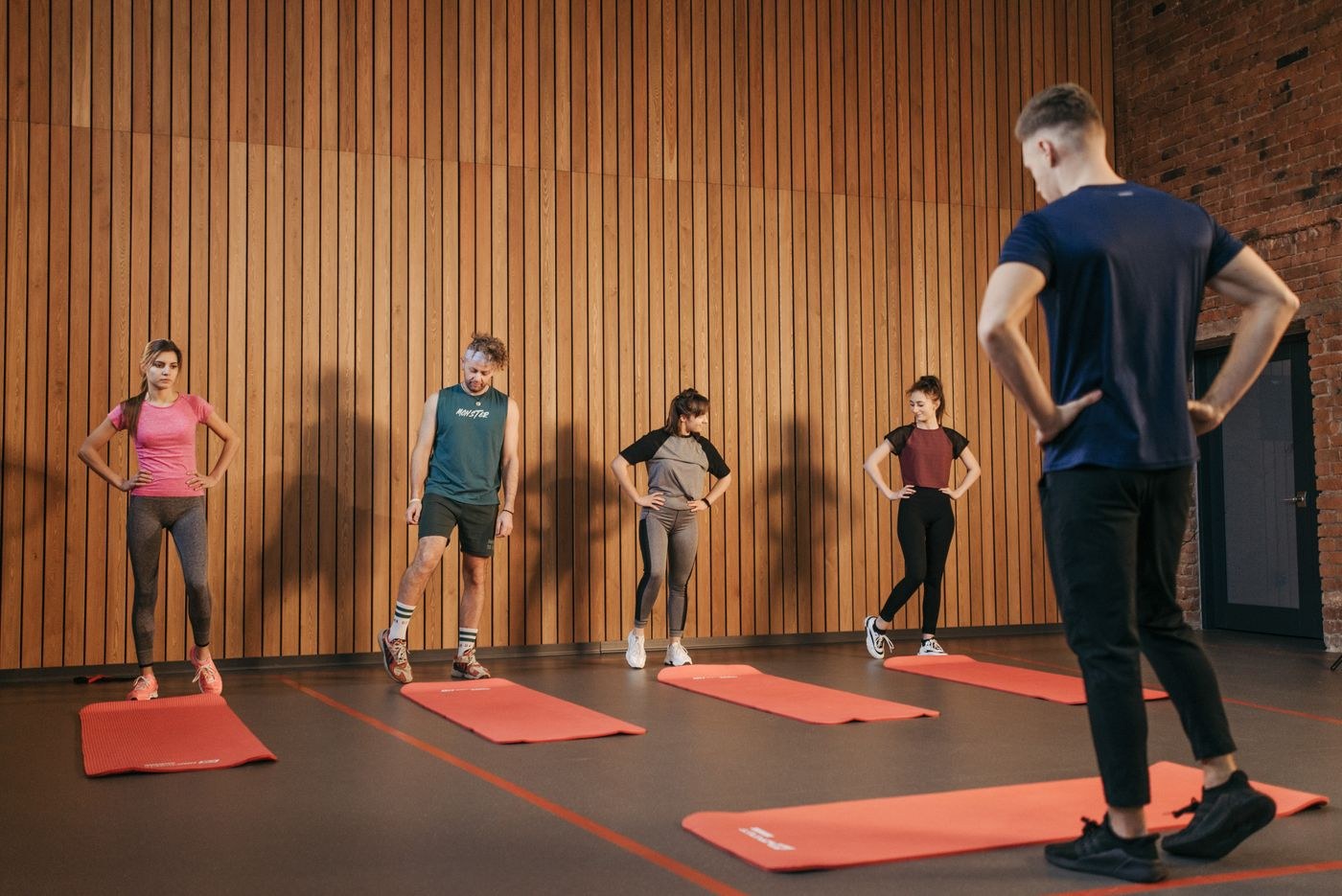
Watch the demonstration and rehearse the position without a load where that makes sense. Check where the weight starts, how you pick it up and where it goes at the end. If those transitions are unclear, a heavier dumbbell will not make the main movement easier to understand. Ask the instructor to watch the setup as well as a repetition.
Choose resistance for the specific exercise. The weight you can carry beside you may be inappropriate for an overhead movement, and the band you use for a lower-body task may feel very different in a row. A pair of matching dumbbells is convenient for some exercises, but there is no reason every station must use that same pair.
Begin with a manageable option and perform a few deliberate repetitions, leaving yourself able to stop and set the equipment down. Look for an even movement, a controlled return and breathing that is not being held throughout the task. If you have to swing, twist or hurry to move the load, reduce it and check the technique.
A band changes tension as it stretches, so the start can feel easier than the end. Test the whole intended movement without exceeding the product's stretch limit. Colour labels are not a universal scale between brands. Record the actual band and setup rather than assuming that every red or green band is equivalent.
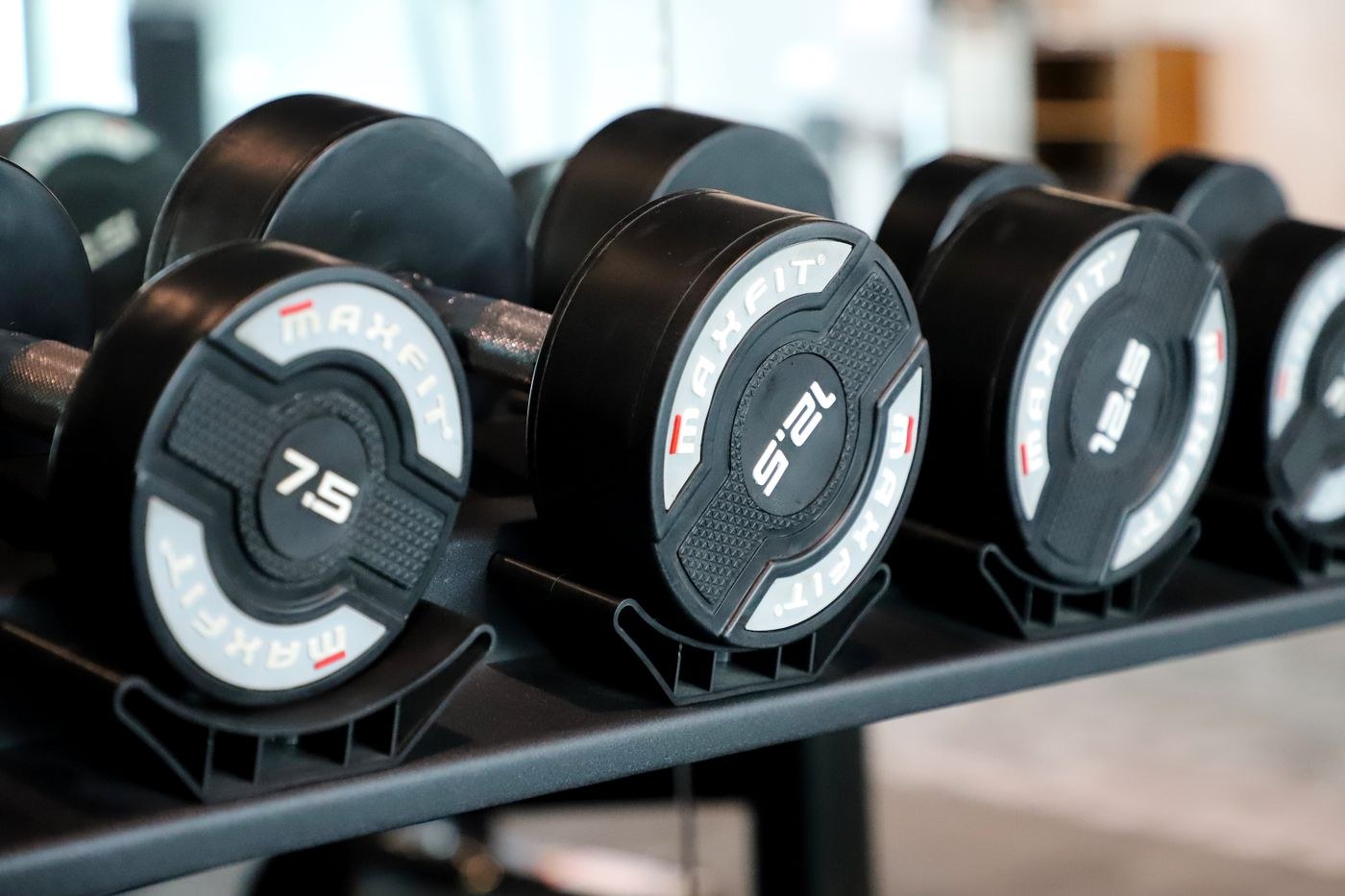
With dumbbells, the next available pair may be a substantial jump. You do not have to take that jump immediately. Repeating the current version more consistently can be a useful learning step. Ask the coach whether the next change should involve the load, range or another part of the exercise instead of improvising several changes together.
Suppose a studio has two light dumbbell pairs but the second is noticeably heavier. The fact that the first feels manageable does not require you to use the second for the full planned set. Ask the instructor whether the current pair still serves the learning purpose or whether another adjustment is appropriate. Do not make an improvised heavier implement by holding several loose weights together; grip and handling would become a different task.
For bands, compare the actual model, length and instructions before choosing a replacement. A shorter band can become highly tensioned within a movement that was comfortable with a longer one. Do not wrap extra loops around your hands or move far from an anchor simply to imitate the feeling of another product. Bring the equipment to the instructor and show the whole setup. A useful resistance choice accounts for the movement's hardest part, the manufacturer's limits and the way you will safely remove tension at the end.
A resistance is not manageable if you can perform the middle of the set but cannot finish it safely. Plan where to put the equipment before starting and end the set while you still have control. Keep other people's feet and moving equipment out of that space.
Record what you used and how it felt in ordinary terms, such as controlled throughout or needed help with the return. These notes make the next choice less arbitrary. New pain, unusual symptoms or a concern about suitability calls for stopping and appropriate advice, not a search for a slightly lighter weight that lets you continue regardless.