Training habits
Packing the evening before works when it removes decisions from a busy morning, rather than creating an elaborate ritual you cannot maintain.
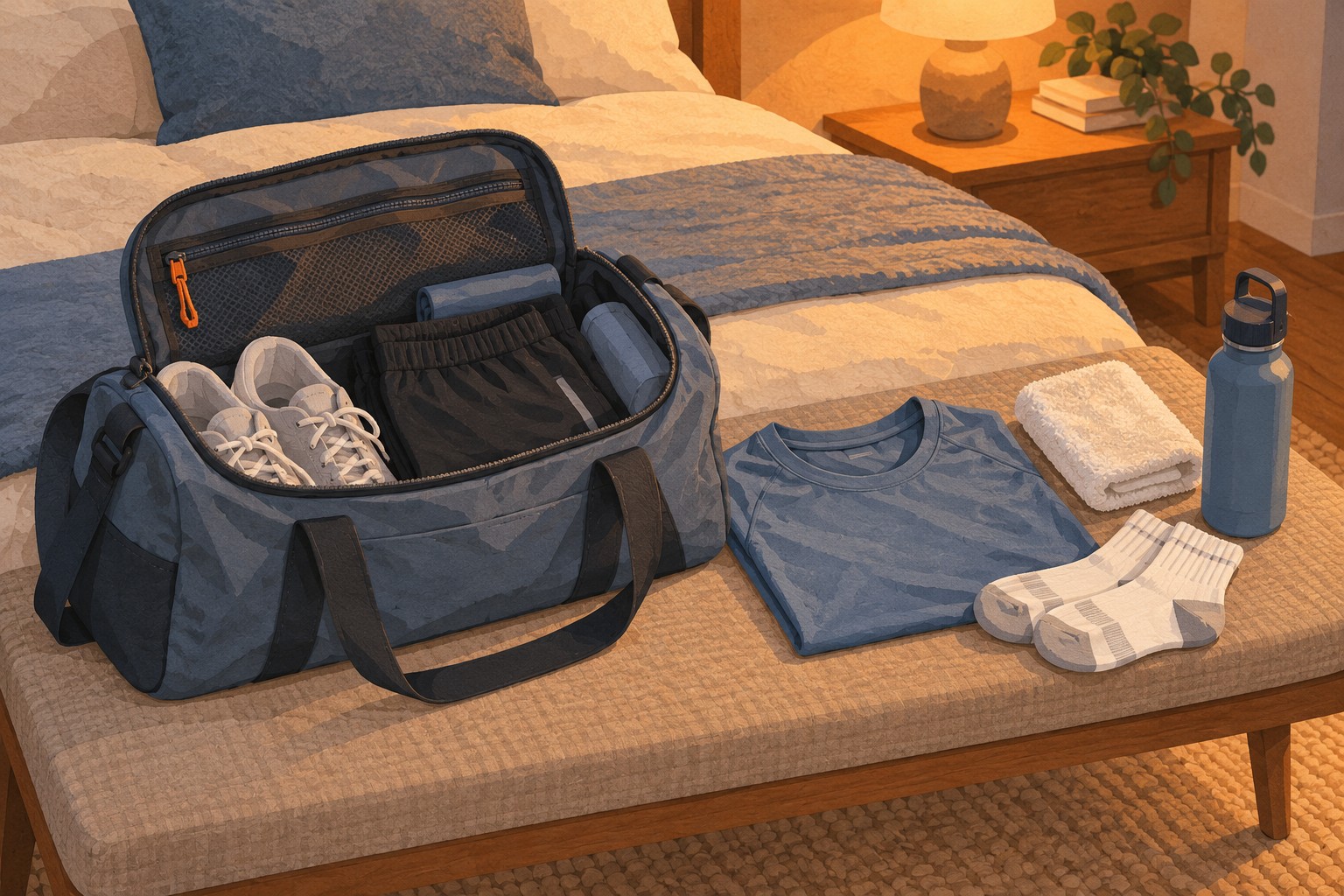
Choose one place for the training bag and one small compartment for keys, entry cards or a padlock. Keep the arrangement simple enough that you can see when something is missing. A bag with many hidden pockets can be less useful than one where the essential items are obvious.
Pack clean clothing, socks and any shoes required by the venue. Check the actual session rather than assuming every class needs the same equipment. A mat may be needed for an outdoor meeting but supplied in a studio. Leave anything unnecessary at home so the bag remains easy to carry and check.
Add a reminder for items that cannot sensibly be packed yet, such as a freshly filled bottle or medication you also use at another time. Keep prescribed items according to their storage instructions. A note beside the bag is more reliable than trying to remember the exception while leaving in a hurry.
After training, remove damp clothes and towels before putting the bag away. Empty and clean the bottle as appropriate, then allow it to dry. Repacking is much easier when the previous session's contents are not still at the bottom of the bag.
Use the next evening's check to confirm the booking, start time and journey. The packed bag does not help if the class moved to another venue or was cancelled. Keep those checks brief and tied to the actual session rather than browsing equipment or new programmes whenever you prepare.
If you miss the evening routine, use a short essentials list the next day instead of abandoning the plan. The habit is a convenience, not a rule that determines whether you are allowed to attend. After a few visits, remove items you never use and add only what the experience shows is missing. The best packing arrangement is the one that makes leaving straightforward with very little thought.