Movement basics
A few gentle seated ankle movements can help you notice comfort and movement before a walk. They are not a requirement to achieve a particular range.
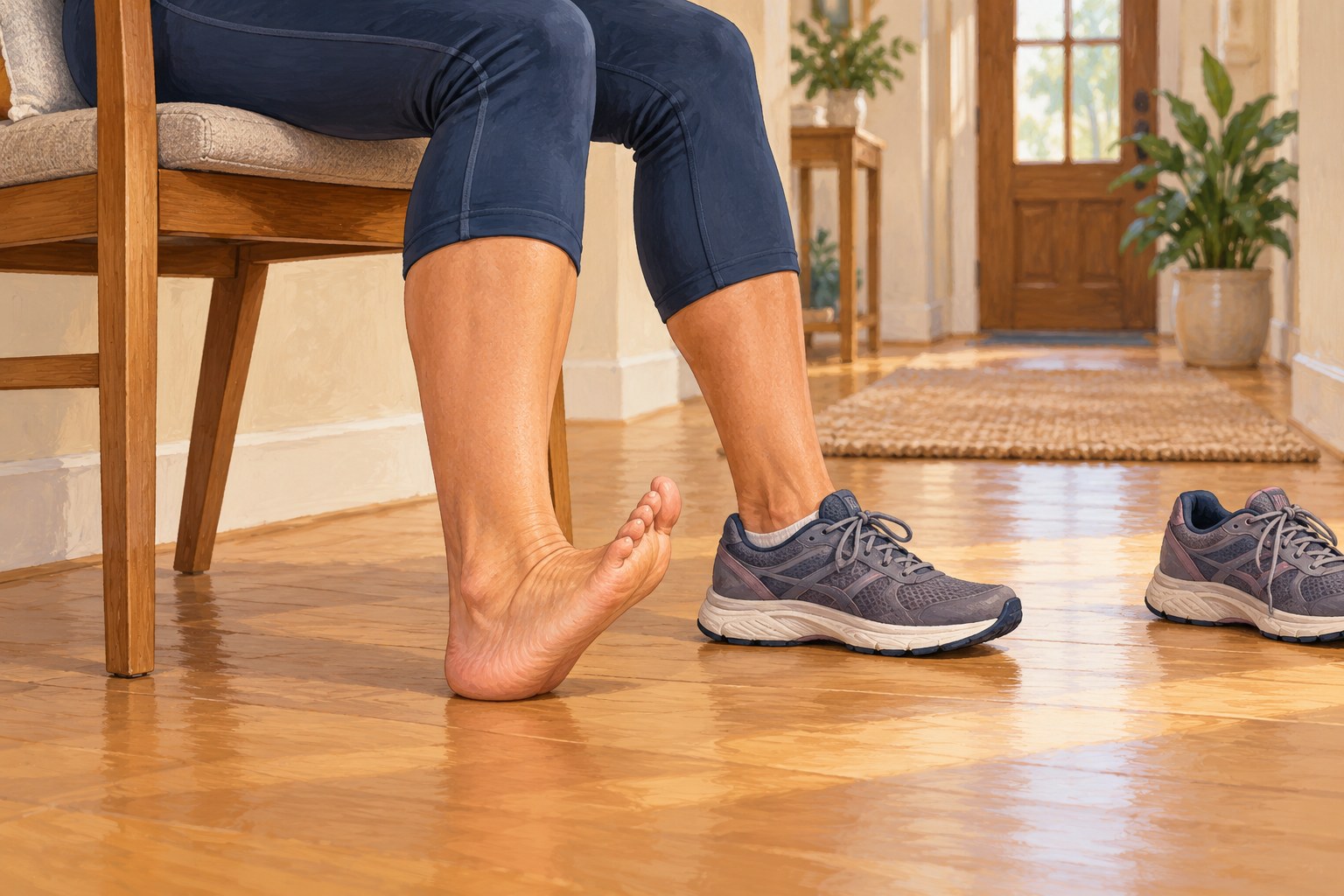
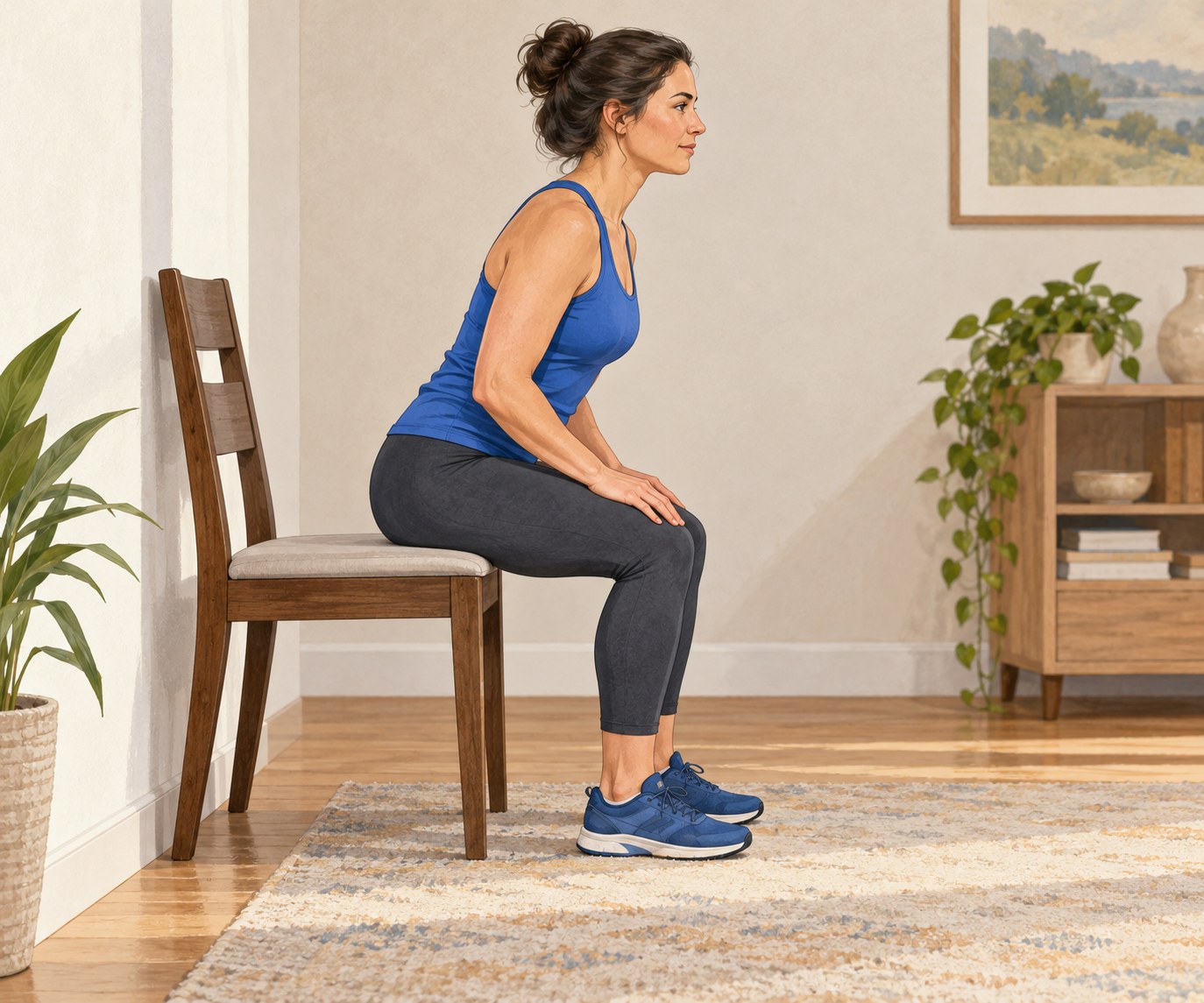
Sit on a stable chair with the feet able to rest on the floor. Move away from a desk or table that restricts the legs. Keep the heel supported while gently lifting the forefoot, then return it to the floor. You can also point and draw back the foot in a comfortable supported position if that is the version you have been shown.
Keep the movement small and deliberate. Avoid rolling the whole leg outwards to make the toes appear to lift farther, and do not force the ankle into an uncomfortable endpoint. The left and right sides may not look identical. That observation is not a diagnosis or a reason to push the smaller movement harder.
Wear footwear that allows the movement or remove it only if the floor and your circumstances make that appropriate. There is no need to balance barefoot on an unstable surface as part of this preparation. If a previous injury or treatment plan affects the ankle, follow the individual guidance you have been given.
Stand carefully and allow a moment to settle before setting off. Start the walk gently rather than assuming a short seated routine has prepared you for an immediate fast pace or steep hill. Choose a familiar route if you are assessing how comfortable the movement feels that day.
Pay attention to symptoms while walking, not only during the seated exercise. Pain, swelling, a feeling of giving way or unusual difficulty warrants stopping and appropriate advice. An ankle movement routine cannot establish whether an injured joint is ready for a longer walk.
For an otherwise comfortable outing, keep the preparation brief and relevant. It should help you notice how you feel without becoming a checklist of increasingly forceful stretches. If the seated movements are unnecessary for your routine, an easy start to the walk may be sufficient; choose the approach that fits your own guidance and experience rather than adding exercises simply to make the preparation look complete.