Movement basics
A shallow squat can help you learn the bending and standing pattern without making depth the main objective.
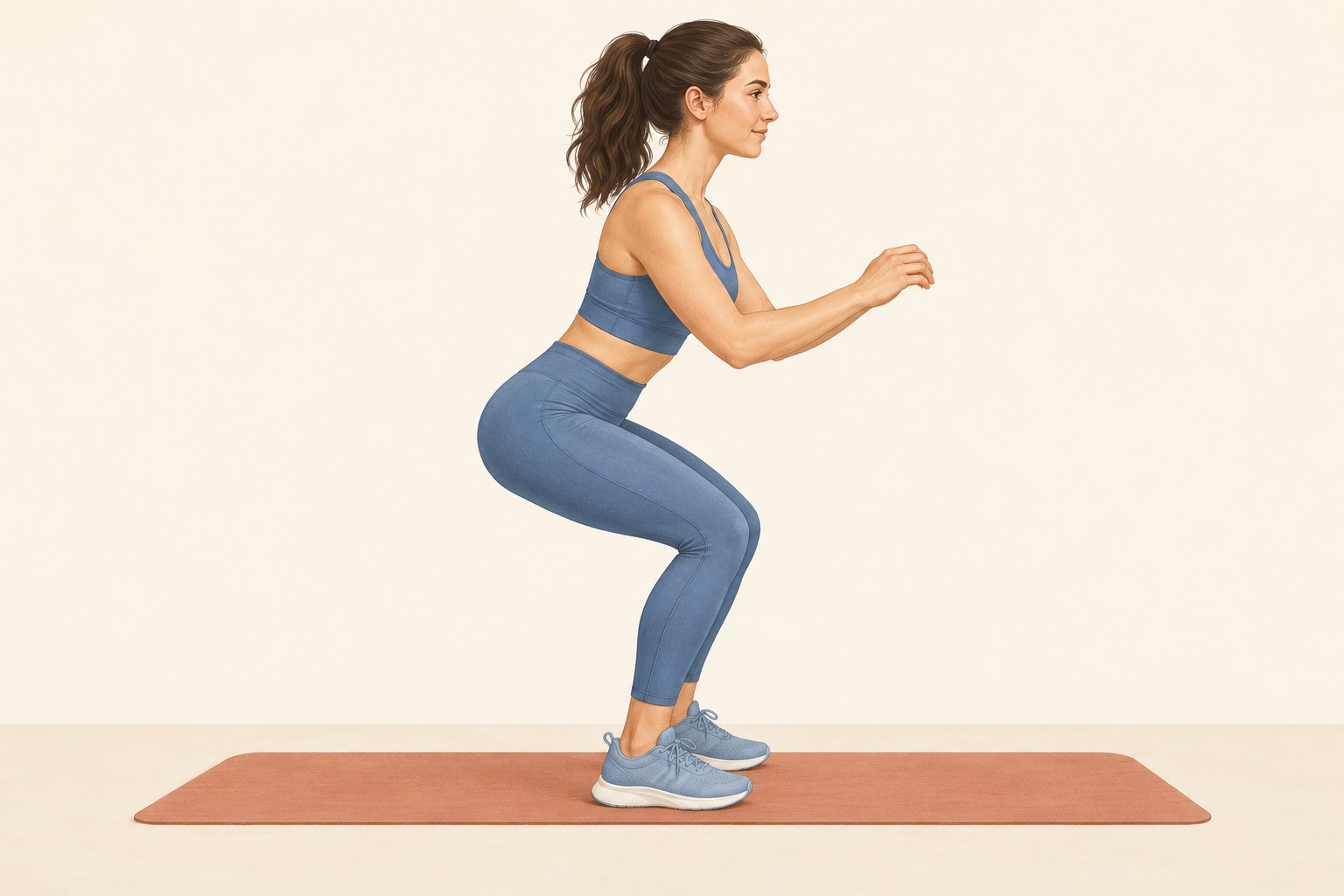
Stand on a firm, level surface with enough space to move your hips back slightly. Choose a comfortable foot width and let the knees follow the general direction of the toes. People's proportions differ, so copying another person's exact stance is less useful than finding one that allows controlled movement.
Use a stable support if that is part of the version you have been shown. A fixed counter or suitable rail should be within easy reach, without making you lean forward to hold it. Do not use a wheeled chair, a loose door or a piece of furniture that can tip. If you need substantial support, ask an instructor to help choose the setup.
Bend the hips and knees a small amount, keeping the feet in secure contact with the ground, then stand again. Think of a smooth change of direction rather than dropping to a target depth. The first attempt may be very shallow. That gives you a chance to notice balance and comfort before increasing the range.
Watch for changes that appear as you lower: heels lifting, feet shifting, a sudden collapse of the knees or a need to pull hard on the support. These observations are reasons to reduce the range and ask for feedback, not to force a deeper position. A mirror can be useful between attempts, but avoid twisting your head during the movement.
Keep the pace calm enough to breathe. Holding your breath through several repetitions can make a basic practice task unnecessarily tense. Stop the set while you still control both directions. Pain is a reason to stop and seek appropriate guidance, rather than evidence that you need to push a little farther.
If the current version is comfortable and repeatable, an instructor may suggest slightly more range. Keep the other details familiar so you can tell what the change does. Adding weight and depth simultaneously makes it harder to understand why a repetition feels different.
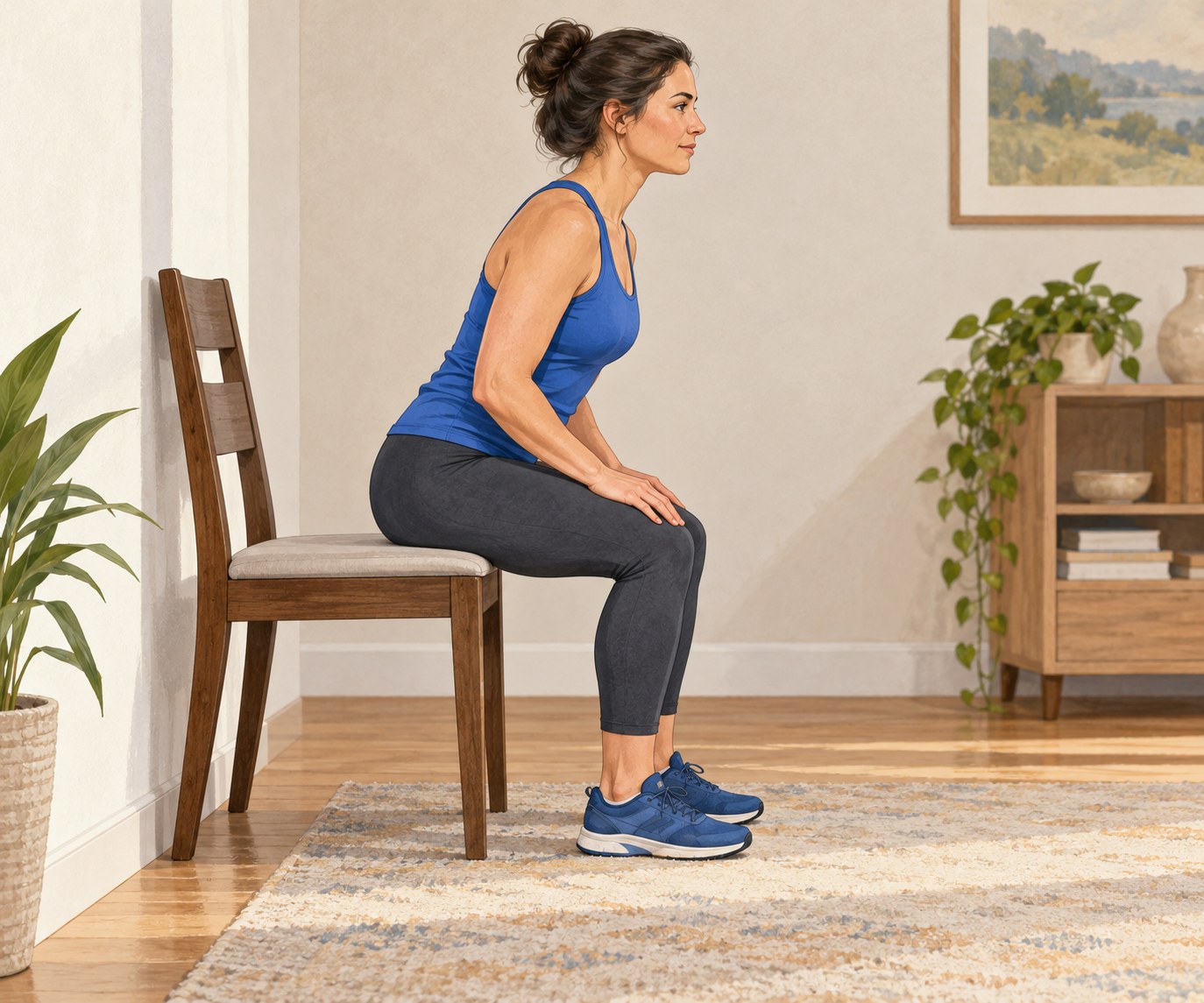
A chair can provide a reference in some versions, but do not lower towards an unstable or unexpectedly low seat. You can also keep a shallow squat in a warm-up or programme without treating it as an unfinished exercise. The useful range is the range that suits the purpose, your current ability and any individual guidance you have received.